
This guide reveals the subtle signs of roof damage that most homeowners overlook. You will learn how to spot quiet leaks that hide inside your walls and attic. We share professional roof maintenance tips to help you identify wear and tear early. Our experts explain why tiny warning signs can lead to major structural failures if ignored. Read this to stay ahead of repairs and keep your Bismarck property in top shape.
Why Subtle Roof Issues Are So Dangerous
Many homeowners think their roof is fine as long as water isn’t dripping onto the floor. However, the most destructive signs of roof damage often start where you cannot see them. Moisture can seep into your insulation for months before a visible stain appears on your ceiling. This hidden dampness creates a perfect environment for mold and wood rot. By the time you notice a problem, the underlying damage has likely spread to your home’s framing.
Watching for early warning indicators is a vital part of being a responsible owner. Initial signs of roof damage include peeling paint near the roofline or a damp smell in the attic. These symptoms suggest that your roof’s protective envelope has been compromised by wind or material degradation. A professional roof inspection is the only way to confirm the extent of the damage. Catching these issues early saves you thousands of dollars and protects your family’s health from mold exposure.
Your Homeowner Roof Inspection Checklist
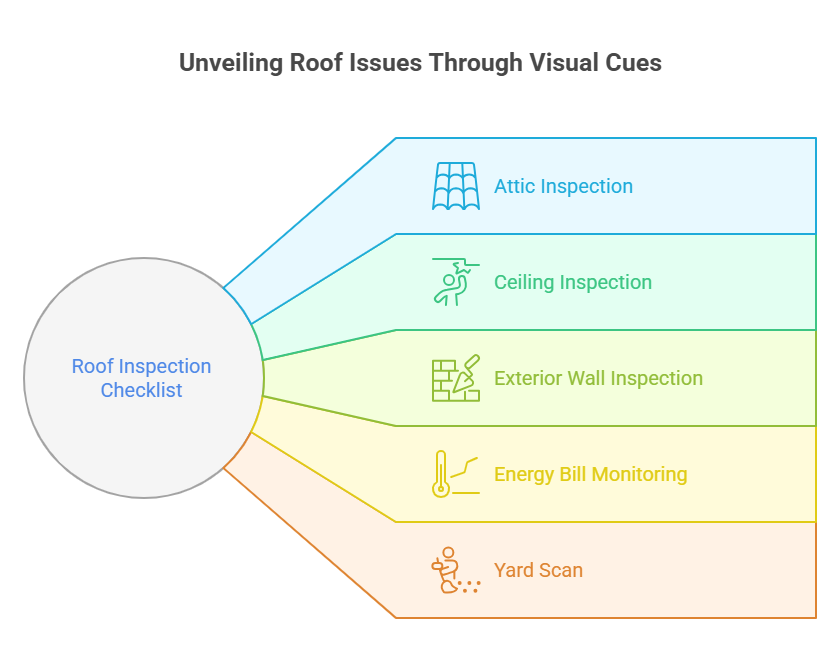
You can find many warning indicators by looking at specific areas of your home’s interior and exterior. This roof inspection checklist helps you identify red flags during your seasonal walk-around. Focus on the transition points where different materials meet, as these are the most common failure spots.
- Check the Attic: Look for sunlight peeking through the roof boards or dark streaks on the rafters.
- Inspect the Ceiling: Search for bubbling paint or yellowish rings in the corners of your rooms.
- Examine the Exterior Walls: Look for step cracks in the brick or siding near the gutters.
- Monitor Energy Bills: A sudden increase in cooling costs can mean your roof’s insulation is wet and failing.
- Scan the Yard: Find pieces of shingle granules or broken plastic vents after a North Dakota windstorm.
Using these roof maintenance tips allows you to act before a disaster happens. If you find even one of these indicators, you should consider when to repair your roof based on expert advice. Do not ignore small changes in your home’s appearance, as they are rarely just cosmetic. A proactive approach is the secret to avoiding a total roof collapse or emergency replacement.
When to Call for a Professional Roof Inspection
There comes a point where a homeowner’s eyes are not enough to assess the full condition of the structure. A professional roof inspection uses thermal imaging to detect temperature differences caused by trapped moisture. These tools can detect anomalies through your shingles to find wet spots that look perfectly dry on the surface. Professionals also check the flashing around your chimney, which is a prime spot for hidden problems.
Table: Visible vs. Hidden Roof Damage
| Visible Sign | Hidden Reality | Action Needed |
| Missing Shingle | Exposed wood deck | Immediate Repair |
| Curled Edges | End of material life | Full Inspection |
| Granules in Gutter | Loss of UV protection | Schedule Maintenance |
| Peeling Wall Paint | Moisture intrusion | Professional Assessment |
| Dark Roof Patches | Algae or standing water | Professional Cleaning |
Knowing when to repair your roof depends on the severity of these findings. An expert can tell you if a simple patch will work or if the structural damage is too advanced. They provide a clear roadmap for your next steps, ensuring you don’t spend money on unnecessary work. Trusting a professional ensures that the root cause of the leak is fixed, not just the visible symptom.
Frequently Asked Questions
What are the most common roof leak signs inside a house?
Look for water stains on ceilings, damp spots in the attic, or a musty odor in upstairs rooms. Bubbling wallpaper and peeling paint near the ceiling are also major red flags.
Can a roof have damage even if it looks new?
Yes, high winds or improper installation can cause signs of roof damage that aren’t visible from the ground. Hidden bruising from hail can also weaken a new roof’s lifespan.
Is mold in the attic a sign of roof damage?
Absolutely. Mold usually means there is either a direct leak or a major failure in your roof’s ventilation system. Both require immediate professional attention.
What are the main roof repair warning signs after a storm?
Check for dented gutters, cracked vents, or shingles that look like they have been lifted or creased by the wind. These issues often lead to leaks during the next rain.
How often should I do a professional roof inspection?
We recommend a professional check every two years. However, if your roof is over 15 years old, an annual inspection is better to catch aging deterioration signs early.
Protect Your Home with Rooftop Renovation
Do not let hidden damage ruin your property’s value and safety. At Rooftop Renovation, we specialize in finding the signs of roof damage that others miss. Our team provides honest, detailed reports and effective repair solutions for Bismarck homeowners. We help you understand the health of your roof so you can make the best decision for your budget.
Your home deserves expert protection. Whether you see warning indicators or just want a routine check, our professionals are ready to serve you. Contact Rooftop Renovation Today.
- Phone: 701-751-7833
- Email: tyler@rooftopnd.com
- Address: 6962 Aurora Loop UNIT A, Bismarck, ND 58503
Schedule your professional roof inspection now and catch small problems before they become major headaches.