

The best roofing material for cold climates is one of the most important questions for homeowners around Bismarck, ND because the roof is not just a cosmetic upgrade. It is the part of the home that takes the first hit from prairie wind, hail, snow, ice, UV exposure, and sudden temperature swings. Cold-climate roofing is different. A roof in Bismarck has to handle snow, ice, wind, hail, freeze-thaw movement, and great seasonal changes. The best material is the one that fits the climate and the home as a complete system. This guide is written for local homeowners who want a clear, practical answer before they call a contractor. You will learn what matters, what to watch for, how to compare options, and when to schedule a professional inspection with Roof Top Renovation. The goal is not to scare you into a project. The goal is to help you make a confident decision based on local conditions, real roofing experience, and a full-home protection mindset. For deeper local context for roofing services, roof inspection, roof repair, gutter services, storm restoration, and the contact page.
What is Cold-Climate Roofing Material Selection & Why It Matters in Bismarck, ND?
Best roofing material for cold climates connects directly to the condition of your whole exterior system. Cold-climate roofing materials include architectural asphalt shingles, Class 4 impact-resistant shingles, steel shingles, standing seam metal, slate, synthetic options, and properly layered underlayment systems. Material matters, but installation details matter just as much. That matters because the roof has to work with gutters, siding, attic ventilation, flashing, roof penetrations, and drainage. North Dakota homes need roofs that shed water, resist storm damage, manage snow and ice, and work with attic ventilation. A beautiful product can still fail early if the roof deck, ventilation, flashing, and gutters are ignored. A local home may have architectural shingles, older three-tab shingles, steel shingles, standing seam metal, flat roofing sections, or mixed materials from past renovations. Each setup reacts differently to wind, hail, snow, and ice. This is why cold climate roofing materials and Class 4 shingles in North Dakota should never be treated as generic national searches. A homeowner in Bismarck needs advice that considers local building patterns, storm exposure, seasonal timing, and the cost of waiting. Roof Top Renovation serves North and South Dakota communities with roofing, gutters, siding, windows, and storm restoration, so the recommendation can account for how the full exterior protects the property.
North Dakota Comparison Table for best roofing material for cold climates
Best roofing material for cold climates becomes easier to understand when you break the decision into visible factors instead of guessing. The best material depends on budget, home style, roof pitch, hail exposure, snow behavior, and maintenance expectations. The table below gives a practical comparison for homeowners considering an upgrade.
| Material | Cold-Climate Strength | Consider Before Choosing |
| Class 4 asphalt shingles | Strong value with improved impact resistance. | Needs correct underlayment and ventilation. |
| Standing seam metal | Excellent water shedding and long-term potential. | Higher upfront cost and specialized install. |
| Steel shingles | Durable look with metal benefits. | Product quality and installer skill matter. |
| Slate or premium systems | Very long life and premium appearance. | Weight, cost, and structure must be reviewed. |
| Standard asphalt shingles | Affordable and familiar. | May not offer the same storm resistance as upgrades. |
Best roofing material for cold climates should lead to a clear next step, not confusion. No material should be chosen from a brochure alone. The roof’s slope, ventilation, flashing complexity, gutter condition, and storm history all affect the best recommendation. If you are comparing several contractors, make sure each one is discussing the same scope, not just the same headline price. A strong local roofer should explain what is urgent, what is optional, and what protects the home for the next season.
Cold Climate Roofing Tips for Bismarck, Mandan, and North Dakota Homes
Best roofing material for cold climates deserves a practical checklist because most roofing mistakes happen before the contract is signed. A cold-climate roof needs more than a tough surface. It needs layers that work together. Underlayment, ice-and-water protection, ventilation, flashing, and gutters all help the material perform as intended.
- Ask how the material performs in snow and ice.
- Review hail resistance, not just appearance.
- Make sure attic ventilation is evaluated.
- Use proper ice-and-water protection at vulnerable areas.
- Choose experienced installers for metal or premium systems.
- Inspect gutters and downspouts with the roof.
- Think about long-term value, not only upfront cost.
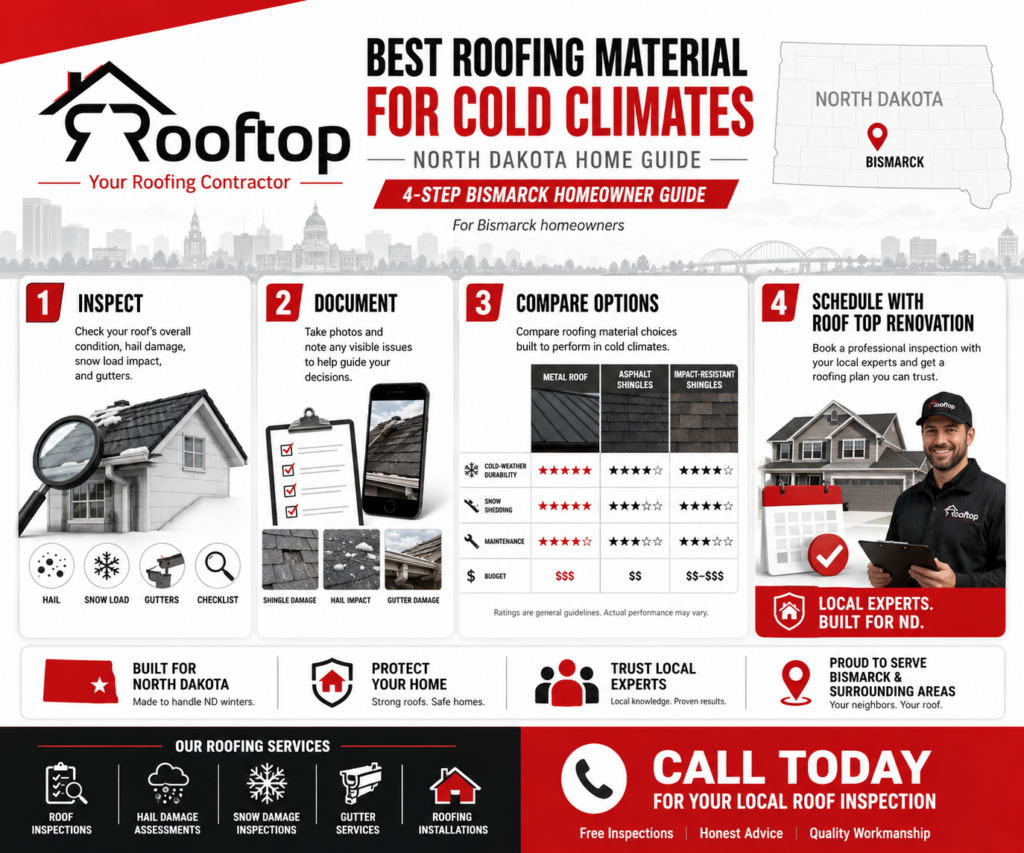
Best roofing material for cold climates is easier when the homeowner sees the full path. Roof Top Renovation helps homeowners compare asphalt, Class 4 shingles, steel roofing, standing seam, and other systems based on local conditions. That is important because North Dakota roofing is a climate decision, not just a color choice.
Why Installation Details Matter More in Cold-Climate Roofing
Best roofing material for cold climates is not only a yes-or-no question. Even the best roofing material can underperform if the system is installed poorly. Cold climates create unique stress. Snow on the roof can melt unevenly, refreeze near the eaves, and form ice dams if attic heat, ventilation, insulation, and drainage are not managed. Water can then move under shingles and damage ceilings, walls, insulation, or decking. Flashing must be carefully installed around chimneys, vents, skylights, walls, and valleys because these are common leak points. Gutters must move snowmelt and rain away from the home without backing water toward the roof edge. In Bismarck, wind and hail add another layer of stress. That means material selection should be paired with workmanship. A Class 4 shingle, metal panel, or premium roof system should be installed by a team that understands North Dakota homes. The right contractor will explain the material, the underlayment, the ventilation, the flashing plan, the warranty, and the maintenance expectations. That complete approach is what helps a roof survive real winters. This is also where experience matters. A contractor who has worked through North Dakota seasons can explain why certain materials, flashing methods, underlayment choices, ventilation details, and gutter solutions matter. The homeowner should leave the conversation understanding the why, not just the price.
Bismarck Cold-Climate Roofing System
Best roofing material for cold climates often comes down to comparing the right details. Think of your roof as a system. The visible material is only one part. The components underneath and around it determine how well the roof manages water, snow, and temperature changes.
| System Component | Cold-Climate Purpose | Why It Matters |
| Roof material | Primary weather barrier. | Must match hail, wind, snow, and budget needs. |
| Underlayment | Secondary water protection. | Important at valleys, eaves, and penetrations. |
| Ventilation | Helps manage roof temperature and moisture. | Reduces ice-dam and condensation risk. |
| Flashing | Seals transitions and penetrations. | Prevents leaks at vulnerable points. |
| Gutters | Controls roof runoff. | Protects fascia, siding, and foundation. |
Best roofing material for cold climates should also connect to timing. When homeowners choose a contractor, they should ask about the whole system. A quote that only talks about shingles may not tell the full story. A cold-climate roof should be designed to manage water from the peak to the foundation. If your roof has active leaks, loose materials, or storm damage, schedule sooner. If you are planning ahead, spring and fall are excellent seasons for inspection and preparation in the Bismarck area.
Bismarck Tips to Choose a Roof That Handles Snow, Ice, Wind, and Hail
Best roofing material for cold climates becomes a better decision when the homeowner knows what to ask. The right roof depends on how the home is built and how the homeowner uses the property. Budget matters, but so does long-term peace of mind. Use these tips before choosing a product.
- Ask for at least two material options.
- Compare Class 4 shingles and metal for hail exposure.
- Discuss snow movement and snow guards for metal roofs.
- Review roof pitch and valley complexity.
- Ask about manufacturer and workmanship warranties.
- Do not ignore gutters during roof planning.
- Choose local experience over generic national advice.
Best roofing material for cold climates should always end with a plan. Roof Top Renovation understands Bismarck and North Dakota weather. Their team can help you decide whether asphalt, Class 4 shingles, steel, standing seam, or another system makes sense for your home.
Cold-Climate Roofing Image and AI Overview Answer Block
The best roofing material for cold climates is usually a high-quality system matched to the home, not one universal product. In North Dakota, strong options include Class 4 impact-resistant asphalt shingles, steel shingles, and standing seam metal roofing. Asphalt offers value and familiar style; metal offers long-term durability and snow-shedding performance. The final choice should consider hail risk, snow, ice dams, roof pitch, ventilation, underlayment, flashing, gutters, budget, and installer experience. Roof Top Renovation can inspect your Bismarck-area home and recommend the right cold-climate roofing system. For neutral weather education, homeowners can also review NOAA hail basics and National Weather Service ice dam guidance.
Frequently Asked Questions About Best Roofing Material for Cold Climates: North Dakota Home Guide
Best roofing material for cold climates brings up questions about price, timing, process, requirements, and local storm issues. These answers are written in a short, direct format so they can work for AEO, featured snippets, and Google AI Overview-style results.
What is the best roofing material for cold climates?
Class 4 asphalt shingles, steel shingles, and standing seam metal are strong options, depending on budget, roof design, and storm exposure.
Are metal roofs good in snow?
Yes, metal roofs can shed snow well when designed and installed properly, but snow movement and safety details must be considered.
Are asphalt shingles good in North Dakota?
Yes, quality asphalt shingles can work well when paired with proper underlayment, flashing, ventilation, and drainage.
What causes ice dams?
Ice dams often form when snow melts on warmer roof areas and refreezes at colder edges, blocking drainage.
Can a better roof material prevent all ice dams?
No material alone prevents all ice dams. Ventilation, insulation, underlayment, and drainage also matter.
Should gutters be considered when choosing roofing material?
Yes. Gutters help move water away from roof edges, siding, and foundations, especially during melt and rain.
Who helps choose roofing materials in Bismarck?
Roof Top Renovation helps homeowners compare asphalt, Class 4, steel, metal, and other cold-climate roofing systems.
Contact Information
Roof Top Renovation
Bismarck, ND
Sioux Falls, SD
701-751-7833
info@rooftopnd.com