A cedar shake roof can give a home a natural, textured appearance that standard asphalt roofing cannot replicate. But cedar shake roofing is more than a visible wood covering. The roof deck, sheathing, underlayment, flashing, ventilation, fastening, shake exposure, roof slope, and maintenance requirements all affect how the completed system performs.
Rooftop Renovation & Exteriors provides cedar shake roofing for property owners who want a distinctive roofing material and a professionally planned installation. Before installation begins, the roof structure, existing materials, roof design, weather exposure, and project requirements should be evaluated so the selected cedar shake system is appropriate for the property.
Considering cedar shake roofing in Bismarck? Start with a professional roof evaluation before selecting the material or planning installation.

A cedar shake roof uses naturally derived wood shakes as the visible roofing material. Cedar shakes generally have a thicker, more textured appearance than cedar shingles and can create a distinctive, dimensional roof surface.
Cedar roofing products can vary in species, manufacturing method, thickness, grade, grain orientation, and finish. Common categories include Western Red Cedar, Alaskan Yellow Cedar, handsplit and resawn shakes, and tapersawn shakes. The appropriate choice depends on the property’s architecture, roof design, performance expectations, maintenance requirements, and available products.
Cedar shakes and cedar shingles are related products, but they are not identical. Shakes are generally associated with a more textured and substantial appearance, while shingles are typically more uniformly sawn and can create a cleaner, more consistent surface.
The difference also extends to manufacturing, thickness, exposure, installation methods, and product specifications. When comparing cedar roofing options, the actual product should be evaluated rather than treating every wood roofing product as interchangeable.
Cedar shake roofing can be manufactured in different forms, and the right option depends on the product specifications and the roof where it will be installed.
Handsplit and resawn shakes combine a textured split face with a more controlled sawn back. This creates the natural, dimensional appearance commonly associated with traditional cedar shake roofing.
Tapersawn shakes are sawn to create a more uniform profile while retaining the visual character of wood shakes. Their more consistent appearance can suit properties where a refined cedar roof is preferred.
Western Red Cedar is widely associated with cedar roofing because of its natural appearance and characteristic wood properties. Product grade, grain, thickness, treatment, and installation still matter when evaluating a specific roofing system.
Alaskan Yellow Cedar is another wood species used for exterior applications. Its properties differ from Western Red Cedar, so the actual product specifications should be reviewed before choosing between species.
Cedar roofing products can differ in grade, grain orientation, knots, thickness, and consistency. Edge-grain and flat-grain products can behave differently, so material selection should consider the intended application rather than relying on species name alone.
Serving Bismarck, ND
Combined Roofing & Construction Experience
Cedar shake roofing is often chosen for its natural appearance and architectural character, but it also requires more consideration than a simple low-maintenance roofing material.
Cedar shakes can provide:
Cedar shake roofing requires more planning and maintenance than some conventional roofing materials. Before choosing it, consider the roof’s design, installation requirements, maintenance needs, fire-performance requirements, and long-term upkeep. Material grade, roof complexity, labor, and preparation can also affect the overall project cost.
The final decision should consider the property’s architectural style, the selected product, maintenance expectations, applicable requirements, and the overall roofing budget.
There is no single cedar shake roof cost that applies to every Bismarck property. The final price depends on the material, roof size, roof design, wood grade, installation requirements, existing roof condition, and preparation required before the shakes can be installed.
Important cost factors can include:
A project estimate should therefore evaluate the complete roofing assembly rather than pricing only the visible cedar shakes.
For a property-specific estimate, an inspection can identify the existing roof condition and the preparation required before installation.
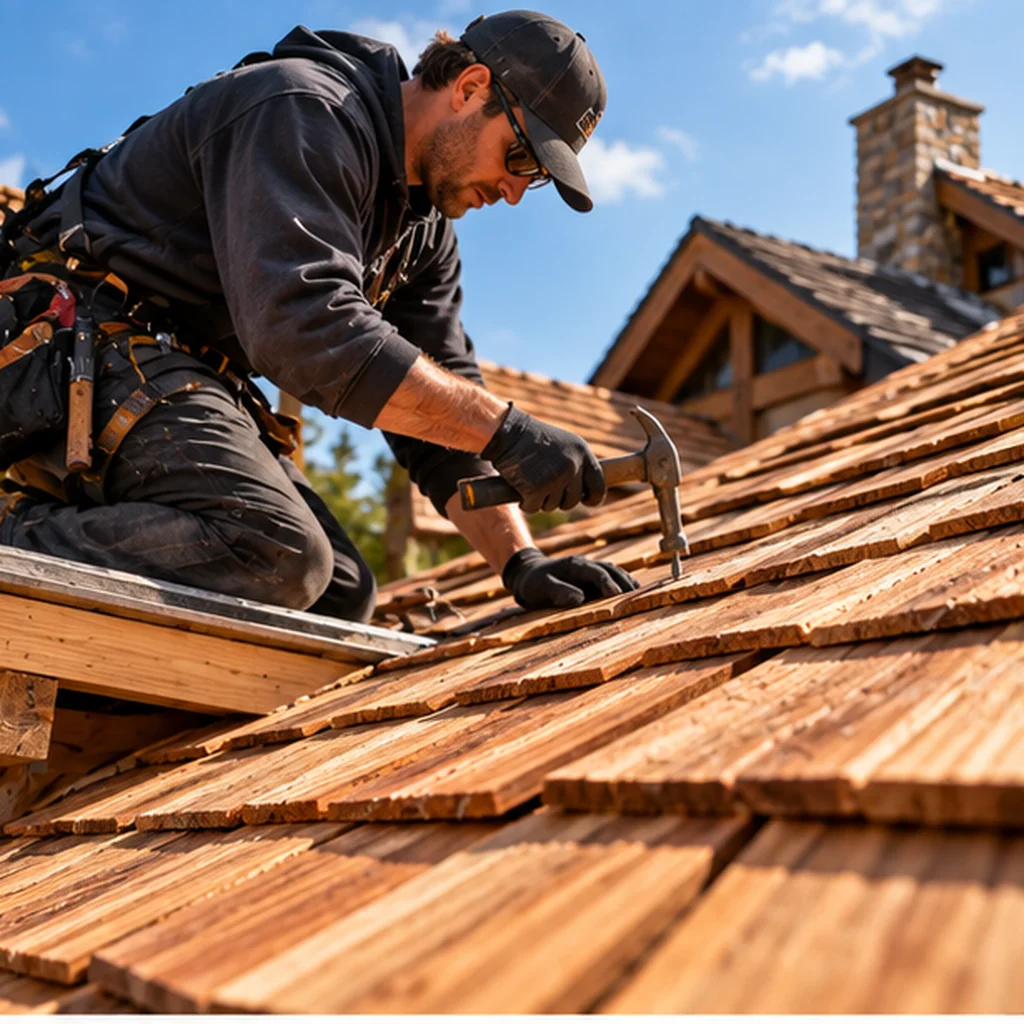
Roof slope is an important part of cedar shake roofing because the roof must shed water effectively. Shake and shingle systems can have different slope and exposure requirements, so the correct installation should follow the selected product's specifications and applicable requirements. The existing roof structure also needs to be considered. Before installing a specialty roofing material, the roof deck, sheathing, framing, existing roofing layers, and other accessible components should be evaluated.
The roof deck provides the underlying surface for the roofing assembly. Depending on the existing construction and selected cedar shake system, sheathing may need to be evaluated for condition, spacing, fastening, moisture damage, and compatibility with the installation method.
The required roof slope and structural suitability should be confirmed for the specific cedar shake product before installation. The evaluation should consider the existing framing, deck condition, roof geometry, and applicable product or building requirements rather than relying on a universal pitch rule.
Rather than relying on a universal roof-pitch or structural rule, the actual cedar shake product and property should determine the appropriate installation requirements.
Professional cedar shake roof installation requires careful preparation because wood roofing needs appropriate spacing, exposure, fastening, ventilation, and water-management details. Refer to the Roof Installation Manual for cedar shake installation guidance and system-specific requirements.
The existing roof is evaluated for condition, slope, drainage, accessible structural components, and other factors that may affect the project. Existing roofing materials are removed as required, and necessary preparation is completed before the new shakes are installed.
The roof is prepared for the selected cedar shake system according to the applicable product and installation requirements. This stage may include the required layers and components beneath the visible shakes.
The shakes are laid out according to the selected product's required exposure, spacing, course arrangement, and roof design. Consistent layout helps create the intended appearance and water-shedding pattern.
Cedar shakes are installed progressively across the roof using the fastening method specified for the selected product. Placement and attachment should follow the product's installation requirements rather than a universal spacing or fastening rule.
Areas such as valleys, hips, ridges, roof edges, walls, chimneys, vents, and other penetrations receive the appropriate finishing and water-management details for the roofing system.
The completed roof is reviewed for visible installation issues, alignment, exposed areas, drainage, flashing details, and other relevant components before the project is considered complete.
Cedar shakes are only the visible part of a complete roofing assembly. Depending on the selected product and roof design, the system can include the roof deck, sheathing, underlayment, interlayment, flashing, ventilation components, fasteners, and other required accessories.
The roof deck and sheathing provide the underlying support for the roofing system. Their condition, spacing, fastening, and compatibility should be evaluated before the cedar shakes are installed.
Underlayment provides an additional water-management layer beneath the cedar roofing. Some cedar shake systems may also use interlayment or other system-specific components according to the selected product's installation requirements.
Flashing helps manage water at vulnerable transitions such as valleys, walls, chimneys, vents, roof edges, and other penetrations.
Ventilation helps manage moisture and temperature conditions within the roof and attic environment. The appropriate ventilation approach depends on the building and the complete roofing system.
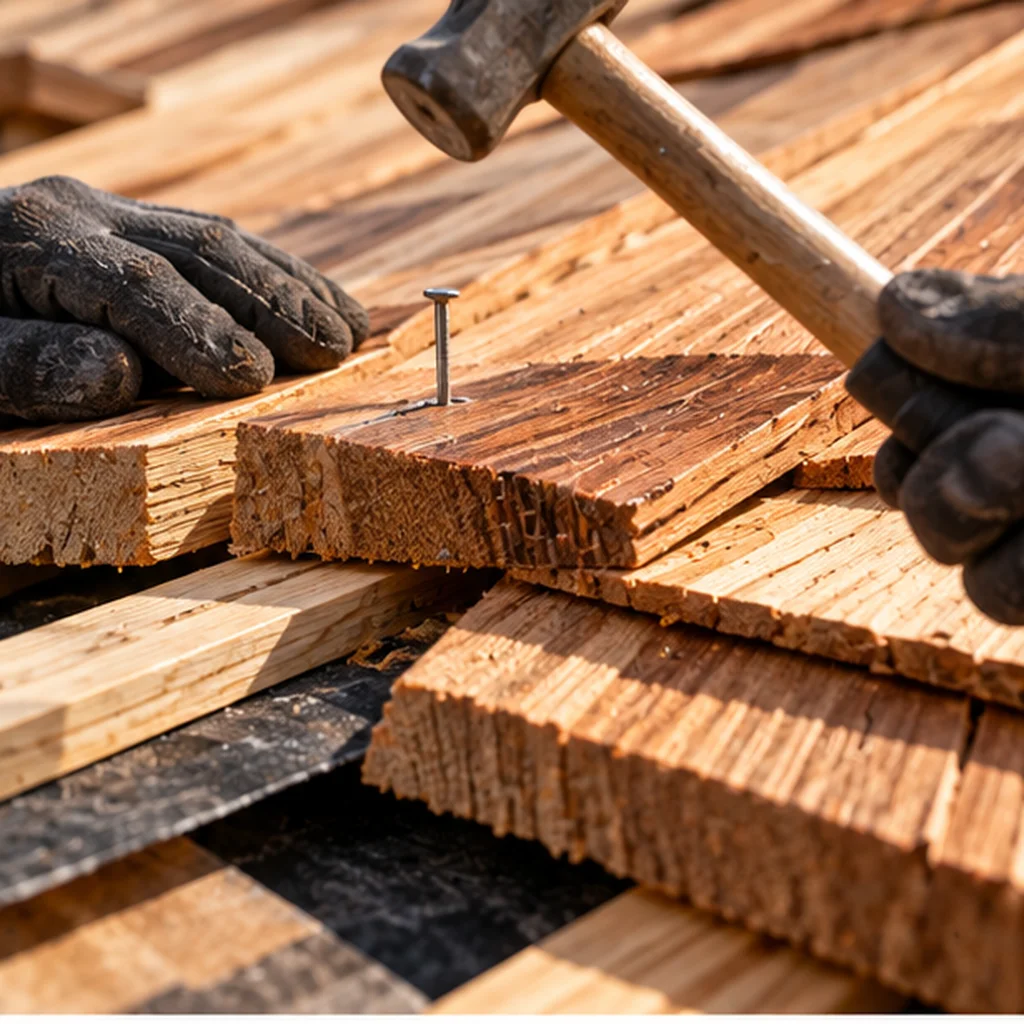
Cedar shakes need an attachment system suited to the actual product, roof design, exposure, and installation requirements. Fastener selection matters because unsuitable or improperly placed fasteners can contribute to premature problems.
Stainless steel and other corrosion-resistant fasteners may be appropriate for certain cedar roofing applications. Ring-shank nails can also be used in systems where specified. The exact fastener type, length, placement, and spacing should follow the product and installation requirements rather than a universal internet rule.
Fasteners should also work with the shake layout, roof deck, exposure, and weather conditions. On a roof exposed to strong wind, proper attachment becomes particularly important.
Bismarck-area roofs experience snow, freezing temperatures, wind, hail, moisture, summer heat, and repeated freeze-thaw conditions. Cedar shake roofing needs to be planned with those environmental factors in mind.
Snow accumulation can place additional demands on a roofing system, while ice dams can contribute to water intrusion around colder roof edges. Proper roof design, insulation, ventilation, flashing, drainage, and maintenance all play a role in managing moisture.
Cedar naturally responds to changes in moisture content. That makes proper spacing, ventilation, fastening, and water management especially important for allowing the roofing system to handle normal environmental movement.
Wind performance depends on the specific cedar product, fastening method, roof assembly, exposure, and installation requirements. Cedar should not be given a universal wind-speed rating without product-specific testing or documentation.
Severe hail can damage cedar shakes just as it can damage other roofing materials. Impact performance depends on the actual product and roofing assembly, so a generic hail-resistance rating should not be assumed for every cedar roof.
Cedar is a natural wood product, so fire performance depends on the specific roofing material, treatment, roof assembly, and applicable testing or code requirements. Some cedar roofing products can be manufactured or treated to achieve specific fire classifications. However, untreated cedar should not automatically be described as having a particular fire rating.
When fire performance is important, ask about the actual product, treatment, tested assembly, applicable requirements, and documentation rather than relying on a general claim about cedar roofing. The same principle applies to insurance considerations. Any potential insurance benefit depends on the insurer, policy, product, and qualifying installation; it should be confirmed directly with the insurance provider.
Cedar shake roofing requires ongoing maintenance to help identify damaged shakes, moisture concerns, debris, biological growth, and other conditions that may affect the roof. The appropriate maintenance routine depends on the product, climate, exposure, and manufacturer guidance.
Leaves, branches, and other debris can retain moisture and interfere with drainage. Keep roof surfaces, valleys, and gutters clear so water can move away from the roofing system.
Moisture and shade can contribute to biological growth. Cedar roofing should be cleaned using methods appropriate for the material rather than aggressive techniques that could damage the shakes.
Check for broken, missing, splitting, curling, or deteriorated shakes during routine inspections. Localized damage may be repairable, while widespread deterioration may require a broader evaluation.
Inspect visible flashing and roof penetrations for signs of deterioration, and investigate ventilation concerns when moisture or condensation problems are present.
Treatment requirements vary by cedar product, climate, exposure, and manufacturer guidance. Follow the recommendations applicable to the specific roofing product rather than using a universal treatment schedule.
A cedar shake roof does not automatically need complete replacement because one or several shakes are damaged. When deterioration is localized and the surrounding roofing system remains serviceable, targeted repair may be appropriate.
The right decision should follow an inspection of the visible roof, accessible components, moisture evidence, flashing, ventilation, and deck condition.
If you need localized cedar shake repair, you can also review Roof Repair in Bismarck, ND before deciding whether a larger replacement project is necessary.
Natural cedar and synthetic cedar-style roofing can create different solutions for property owners, and neither should be treated as automatically better for every building.
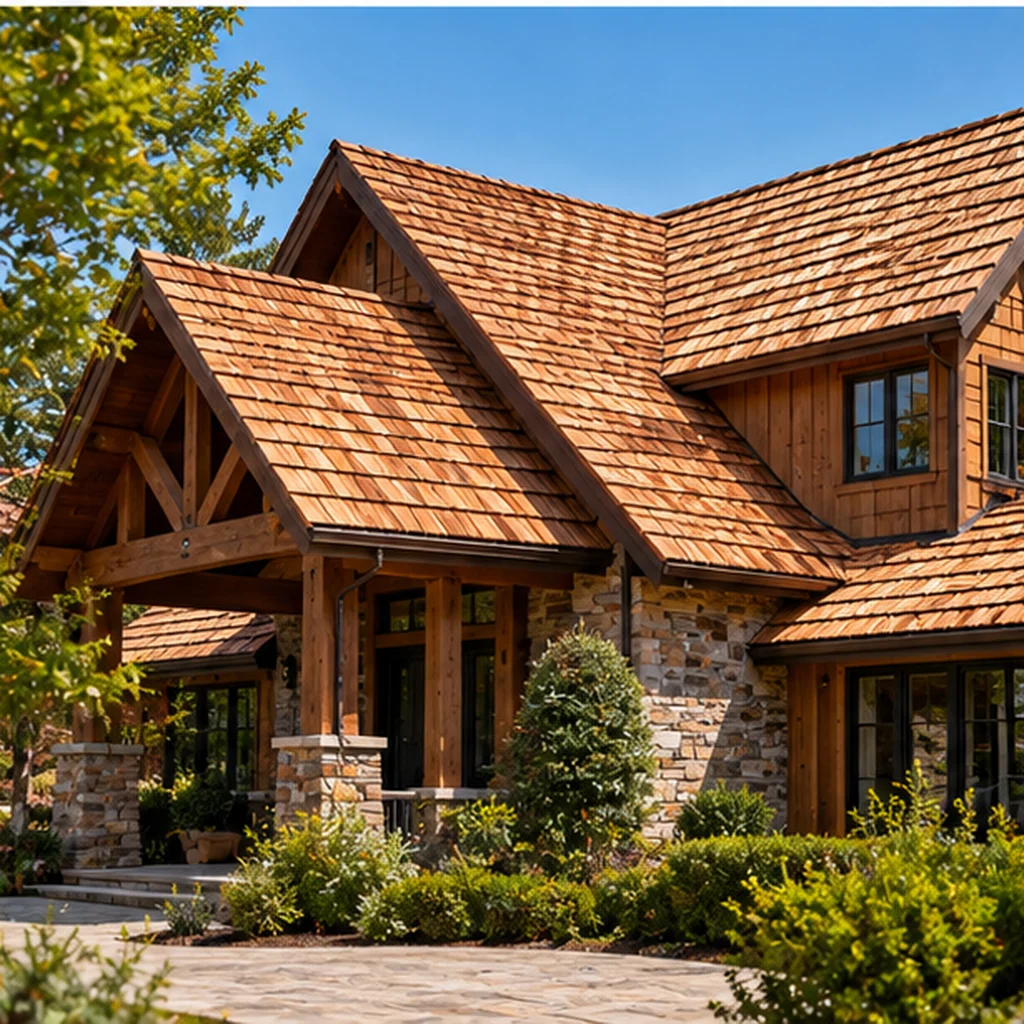
Natural cedar provides genuine wood texture, natural color variation, and the characteristic appearance associated with traditional cedar shake roofing. It also requires attention to moisture, ventilation, maintenance, treatment requirements, and natural weathering.
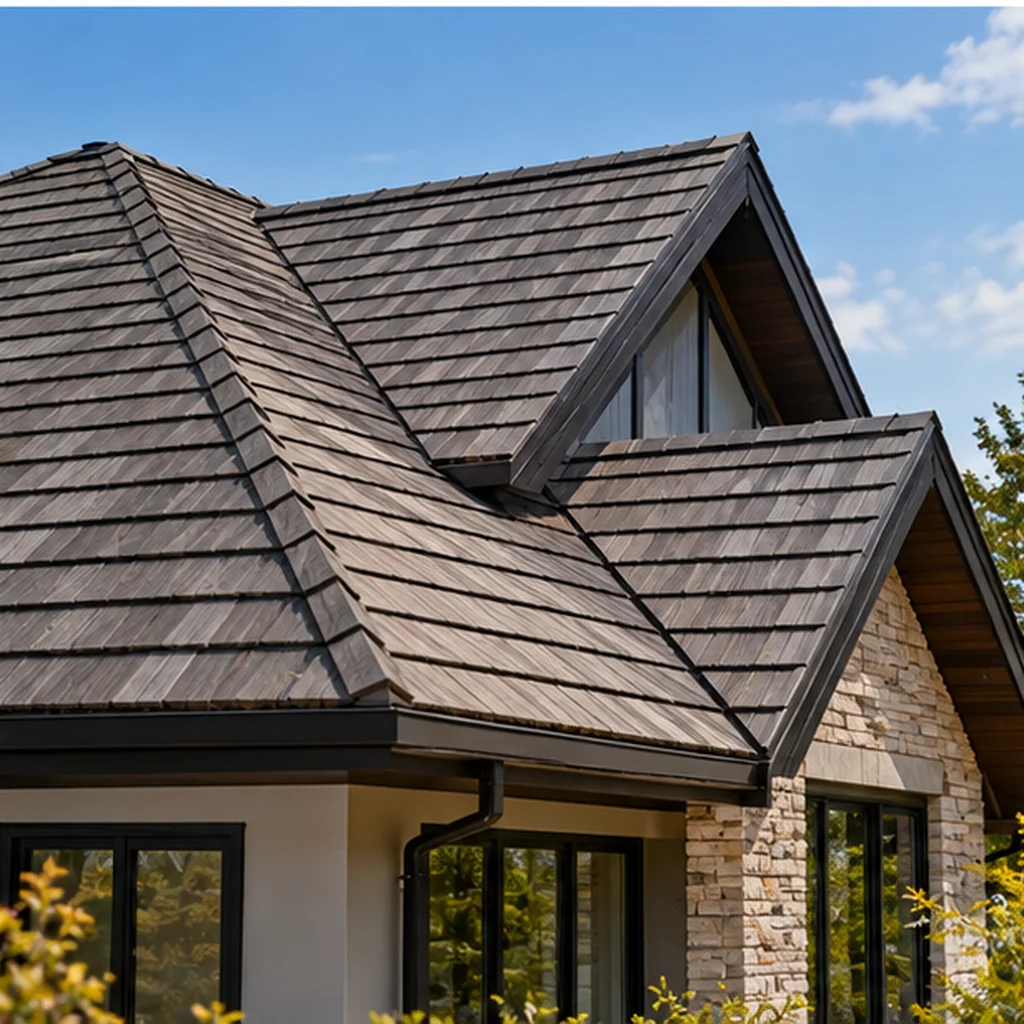
Synthetic cedar products can recreate the appearance of wood using engineered materials. Depending on the specific product, they may offer different maintenance, fire-performance, impact, weight, and weathering characteristics.
The correct comparison should be based on the actual products being considered. Look at appearance, maintenance requirements, fire performance, warranty, installation requirements, roof structure, weather exposure, and total project cost rather than comparing material names alone.
A cedar shake roof deserves an installation plan that considers the entire roofing assembly rather than focusing only on the visible wood material.
Rooftop Renovation & Exteriors provides residential and commercial roofing services in the Bismarck area and works with multiple roofing systems, including cedar shake roofing. The company’s broader roofing approach considers connected components such as roof decking, underlayment, flashing, ventilation, drainage, and installation requirements when evaluating a roofing project.
For a specialty roofing project, the goal should be a clear scope, appropriate material selection, careful preparation, professional installation, and an understanding of ongoing maintenance requirements.
For broader roofing needs, you can also explore Roofing Services in Bismarck, ND, or Roof Installation in Bismarck, ND to review related services.
Rooftop Renovation & Exteriors serves property owners in Bismarck, Mandan, and surrounding communities with roofing services that include cedar shake roofing. Cedar shake project availability can depend on the property, project requirements, crew scheduling, and location, so confirm coverage before planning a specialty roofing project.
For homeowners and businesses considering cedar shake roofing near Bismarck, ND.
Rooftop Renovation & Exteriors also lists Fargo, Jamestown, Dickinson, Sioux Falls, and Aberdeen within its broader service area. Cedar shake roofing availability may vary by project type, property location, material requirements, and scheduling, so contact the team to confirm service for your address.
Cedar shakes generally have a thicker and more textured appearance, while cedar shingles are typically more uniformly sawn. The products can also differ in manufacturing, thickness, exposure, and installation requirements.
Service life depends on the cedar species, product quality, installation, climate exposure, ventilation, maintenance, moisture management, and condition of the complete roofing assembly. A universal lifespan should not be assumed for every cedar shake roof.
Common cedar roofing products can include Western Red Cedar and Alaskan Yellow Cedar. The appropriate species depends on the selected product, grade, availability, appearance, and project requirements.
Handsplit and resawn shakes combine a textured split face with a more controlled back, while tapersawn shakes are sawn to create a more uniform profile. Both can provide distinctive cedar roofing appearances.
Yes, localized damage can sometimes be repaired by replacing individual shakes. The surrounding material, fastening, underlayment, flashing, and condition of the roof should also be evaluated.
Cedar shake roofs can be used in cold climates when the product and complete roofing system are appropriately selected and installed. Consider snow, moisture, freeze-thaw cycles, ventilation, drainage, and maintenance.
Some cedar roofing systems may benefit from treatment or preservation, while others have different maintenance requirements. The appropriate approach depends on the actual product, climate, exposure, manufacturer guidance, and desired appearance.
Yes. Repair can be appropriate when damage is localized, and the surrounding roof remains serviceable. Widespread deterioration, repeated leaks, extensive rot, or major structural and deck problems can shift the decision toward replacement.
Cedar shake roof cost depends on the wood species, grade, roof size, slope, complexity, labor, tear-off, deck condition, underlayment, flashing, ventilation, treatment, and other project requirements. A property-specific estimate is more reliable than a universal price range.
Cedar shake roofing can give your property a distinctive natural appearance, but getting the right result requires more than choosing a wood product. Roof slope, deck condition, sheathing, underlayment, flashing, ventilation, fasteners, shake exposure, weather exposure, and ongoing maintenance all matter.
If you are considering a new cedar shake roof, replacement, or localized repair in Bismarck, Mandan, or a surrounding community, start with a professional evaluation of the existing roof and project requirements.
Request a professional roof inspection and discuss your cedar shake roofing project with Rooftop Renovation & Exteriors.
