Copper roofing offers a distinctive architectural appearance, long-term durability, and natural aging that develops a unique patina over time. Rooftop Renovation & Exteriors provides professional copper roof installation in Bismarck, ND, for residential and commercial properties.
Whether you are considering a full copper roof, standing seam copper panels, copper shingles, architectural accents, or custom flashing, our team can evaluate your property and help determine the appropriate copper roofing system for its structure, design, weather exposure, and long-term goals.

A copper roof is a complete roofing system made with copper panels, shingles, tiles, or formed copper components. Unlike painted metal roofing, copper naturally oxidizes over time and develops a protective patina that changes its appearance as the material ages.
Copper is valued for its architectural appearance, corrosion resistance, long potential service life, recyclability, and ability to adapt to complex roof designs. A complete system may include copper panels or shingles, seams, clips, fasteners, underlayment, flashing, valleys, ridges, eaves, gutters, downspouts, and roof penetrations.
For properties in Bismarck and across North Dakota, installation details are especially important because copper expands and contracts as temperatures change. Proper seams, attachment methods, flashing, and movement detailing help the roofing system manage thermal movement while maintaining effective water drainage.
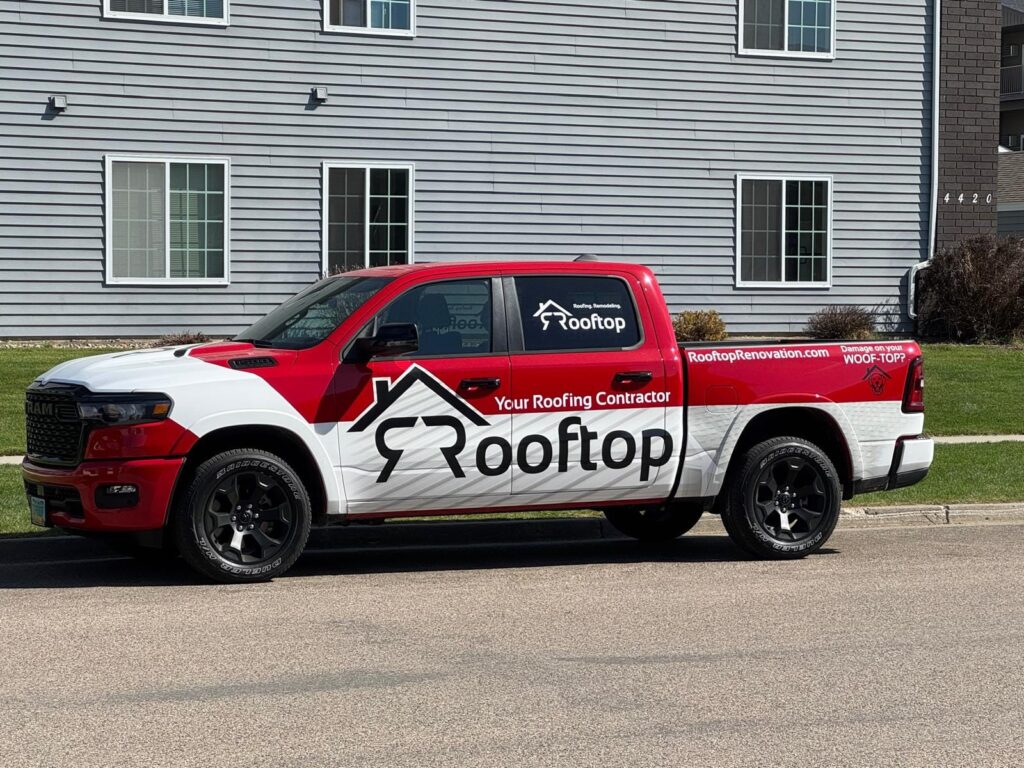
Serving Bismarck–ND
Combined Roofing & Construction Experience
Copper roofing is a premium roofing system, and its performance depends on much more than the visible copper surface. Roof slope, flashing, drainage, underlayment, attachment methods, thermal movement, snow and ice exposure, and surrounding materials all need to be considered during installation.
Bismarck properties experience cold winters, snow, ice, wind, hail, precipitation, and significant seasonal temperature changes. These conditions make proper water management and movement detailing particularly important when selecting and installing copper roofing.
Rooftop Renovation & Exteriors serves Bismarck, Mandan, and surrounding North Dakota communities and currently provides residential and commercial roofing services. The company’s official roofing information emphasizes evaluation of the entire roofing system and recommendations based on the property, budget, and long-term protection needs.
For a premium material such as copper, the goal should not simply be to install an attractive roof. The goal is to create a complete roofing system that works with the building and its local environment.
Rooftop Renovation can help property owners evaluate copper roofing options and determine whether a full roof, partial application, repair, replacement, or architectural copper detail is appropriate for the property.
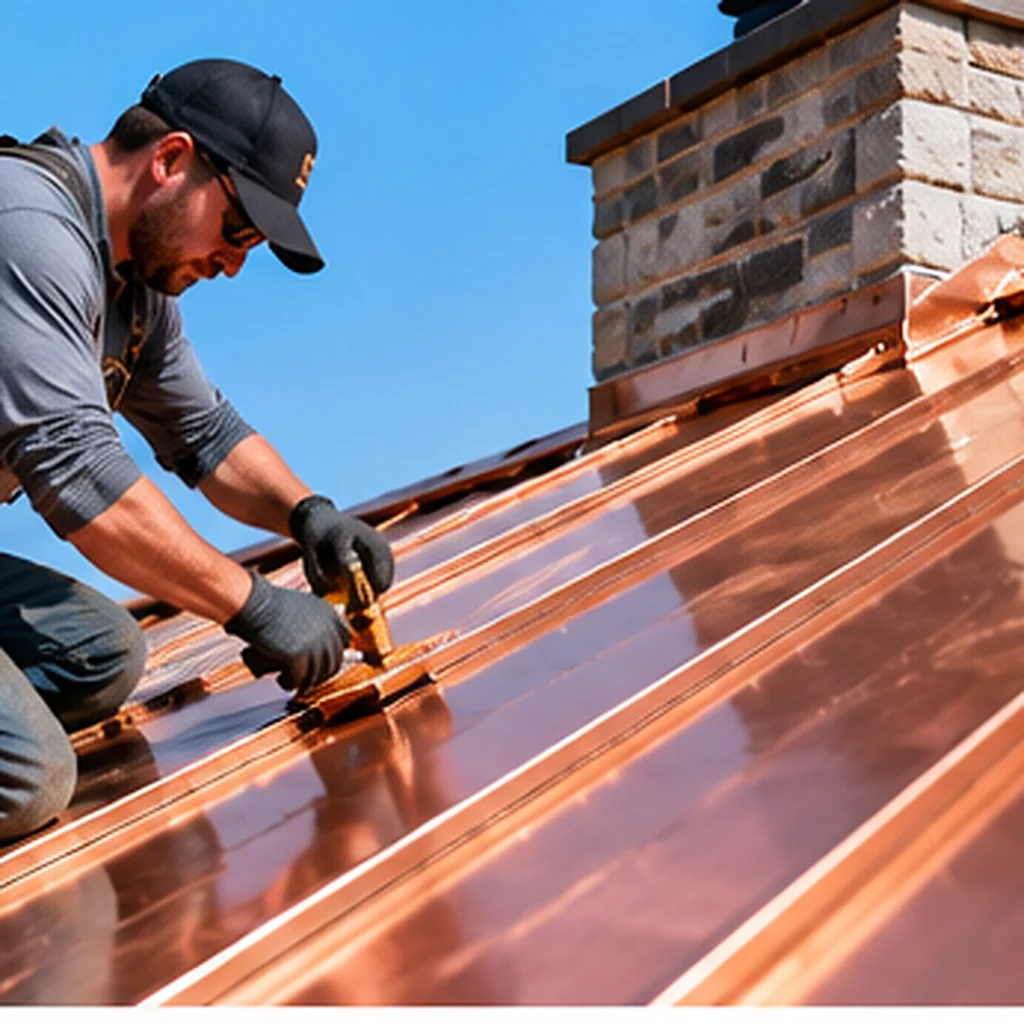
Professional installation of copper roofing systems with attention to roof preparation, seams, flashing, water management, thermal movement, and compatible components.
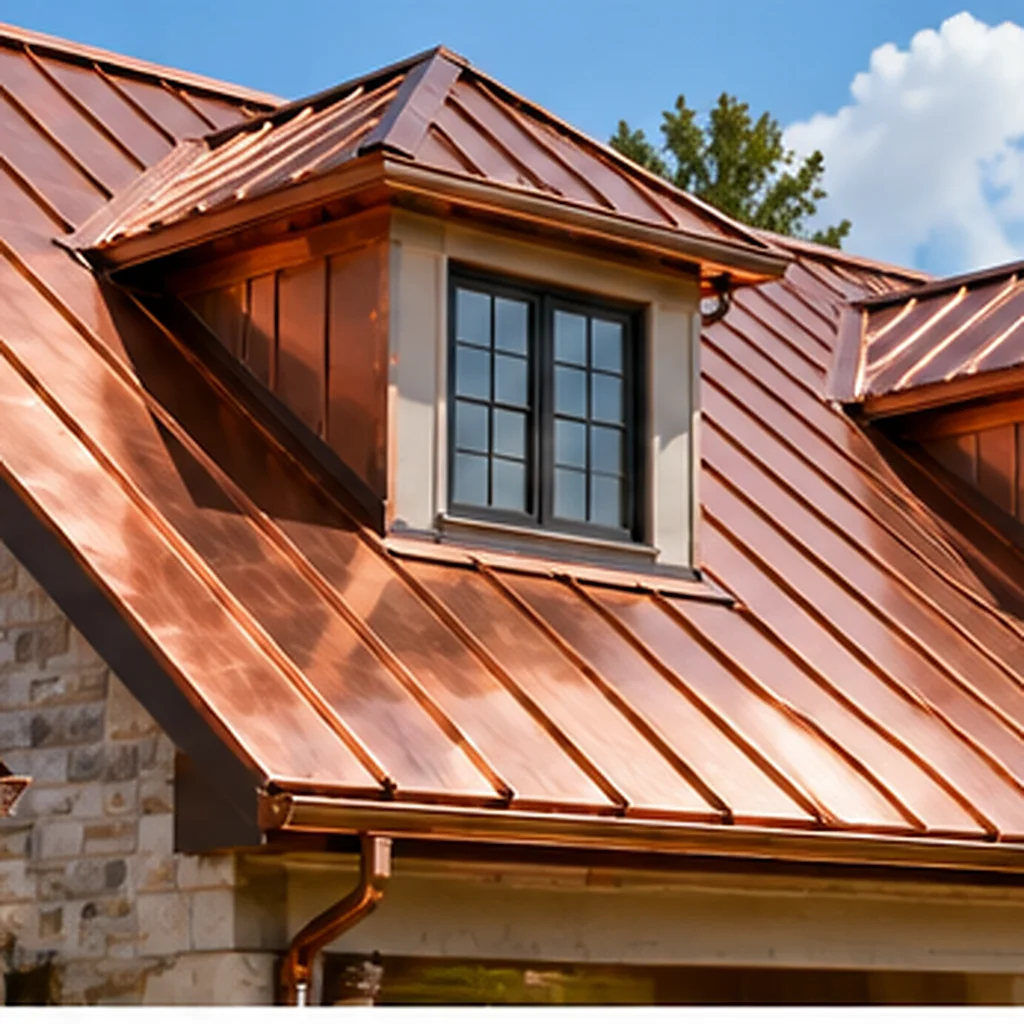
Long copper panels with raised seams and appropriate concealed attachment methods can create clean architectural lines while supporting effective water management and controlled thermal movement.
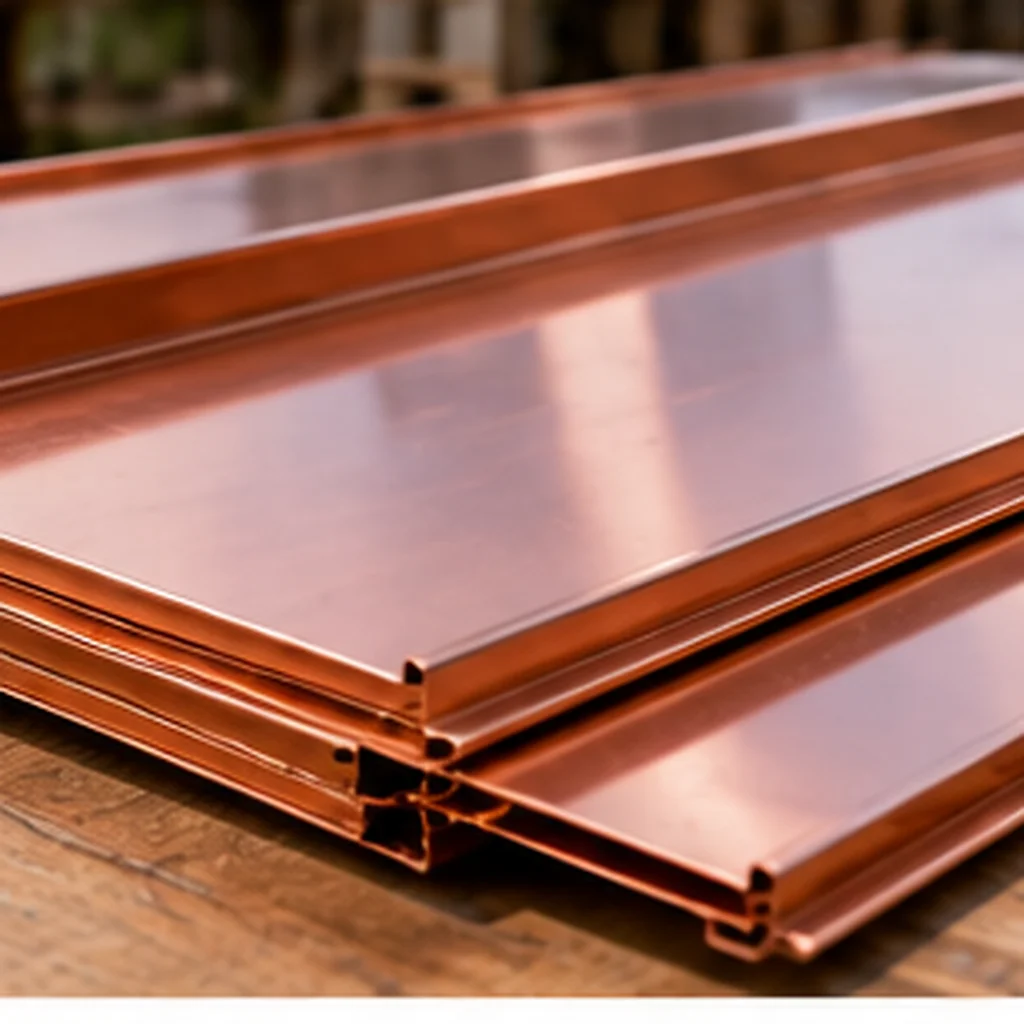
Copper panels can be used for complete roofing applications or selected portions of a building where architectural appearance and long-term material performance are important.
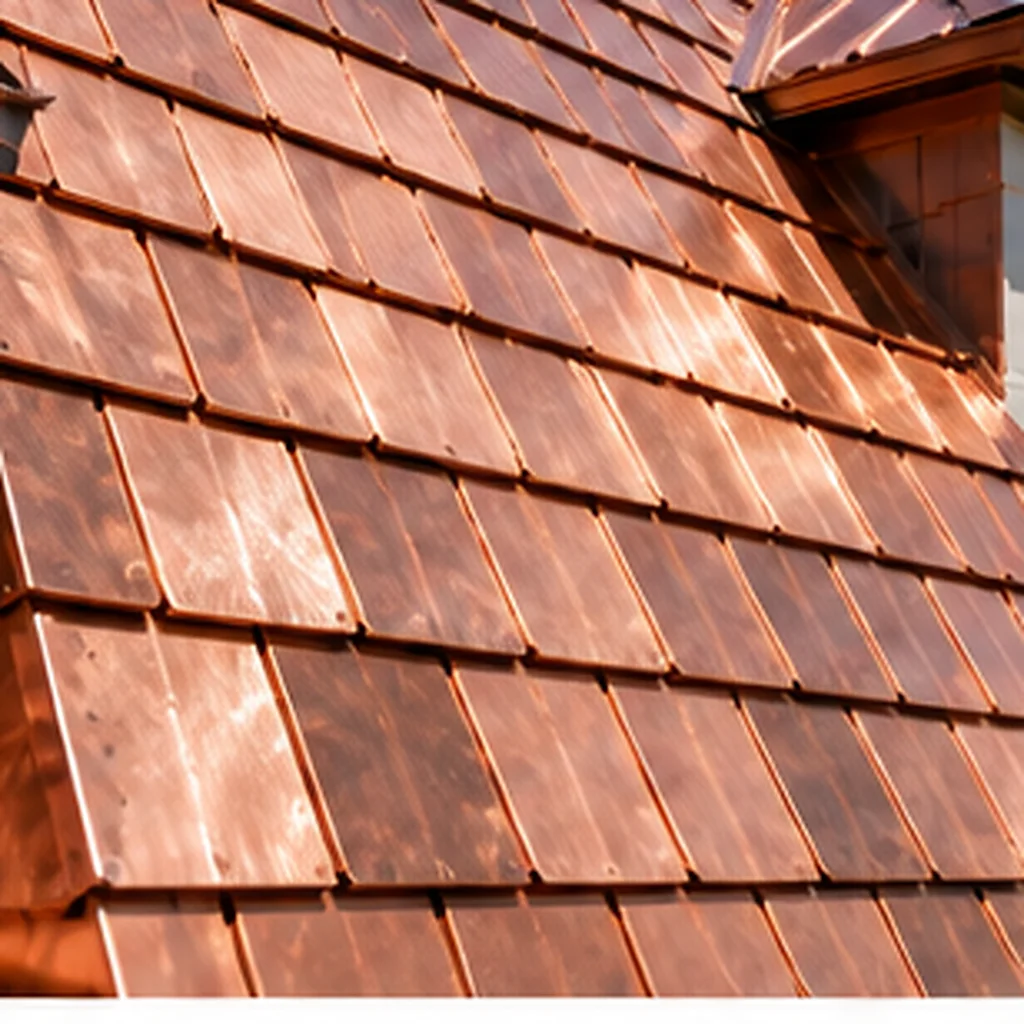
Individual copper shingles and tiles can provide a more traditional appearance and work particularly well with custom, historic, and architecturally detailed properties.
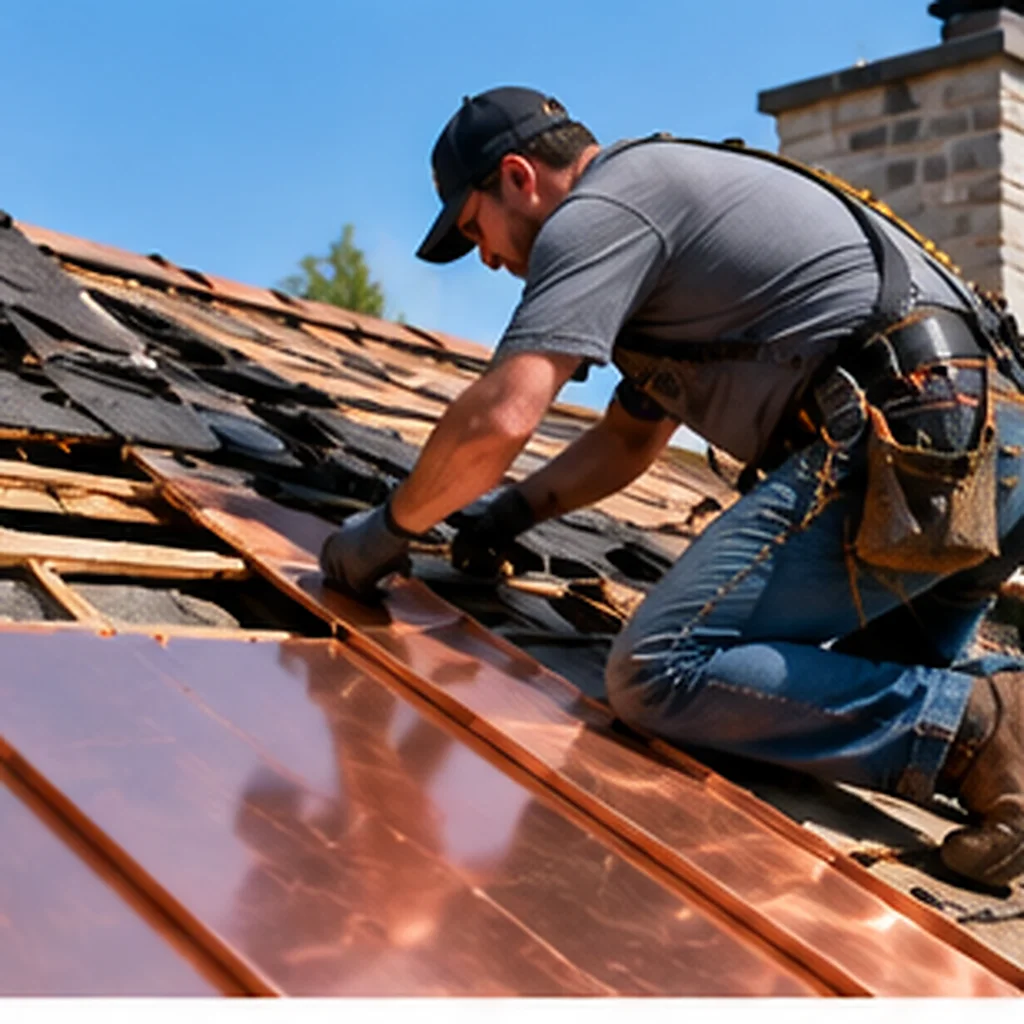
When an existing roofing system has extensive deterioration, recurring leaks, or underlying problems that make continued repair impractical, replacement may provide a more appropriate long-term solution.
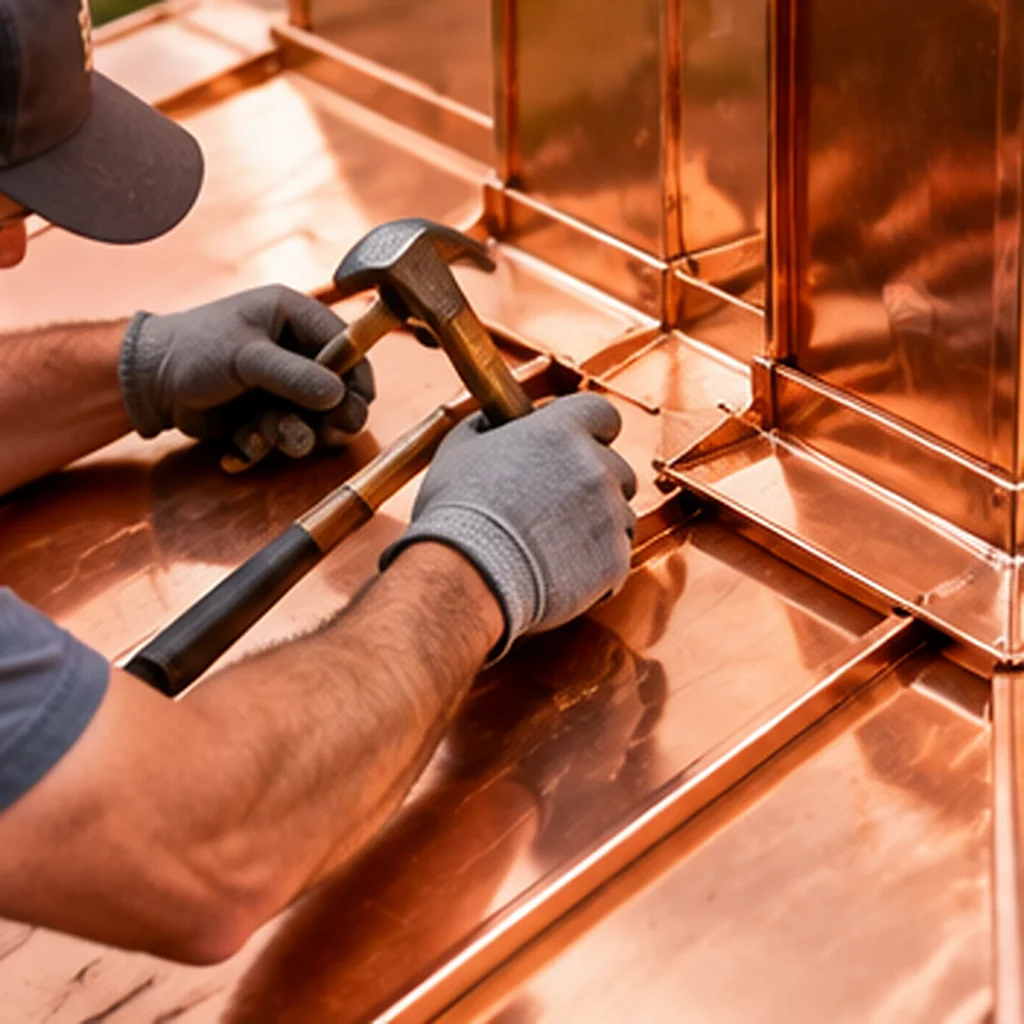
Localized damage to panels, seams, flashing, or other components may sometimes be repaired without replacing the entire roof, depending on the condition of the existing system.
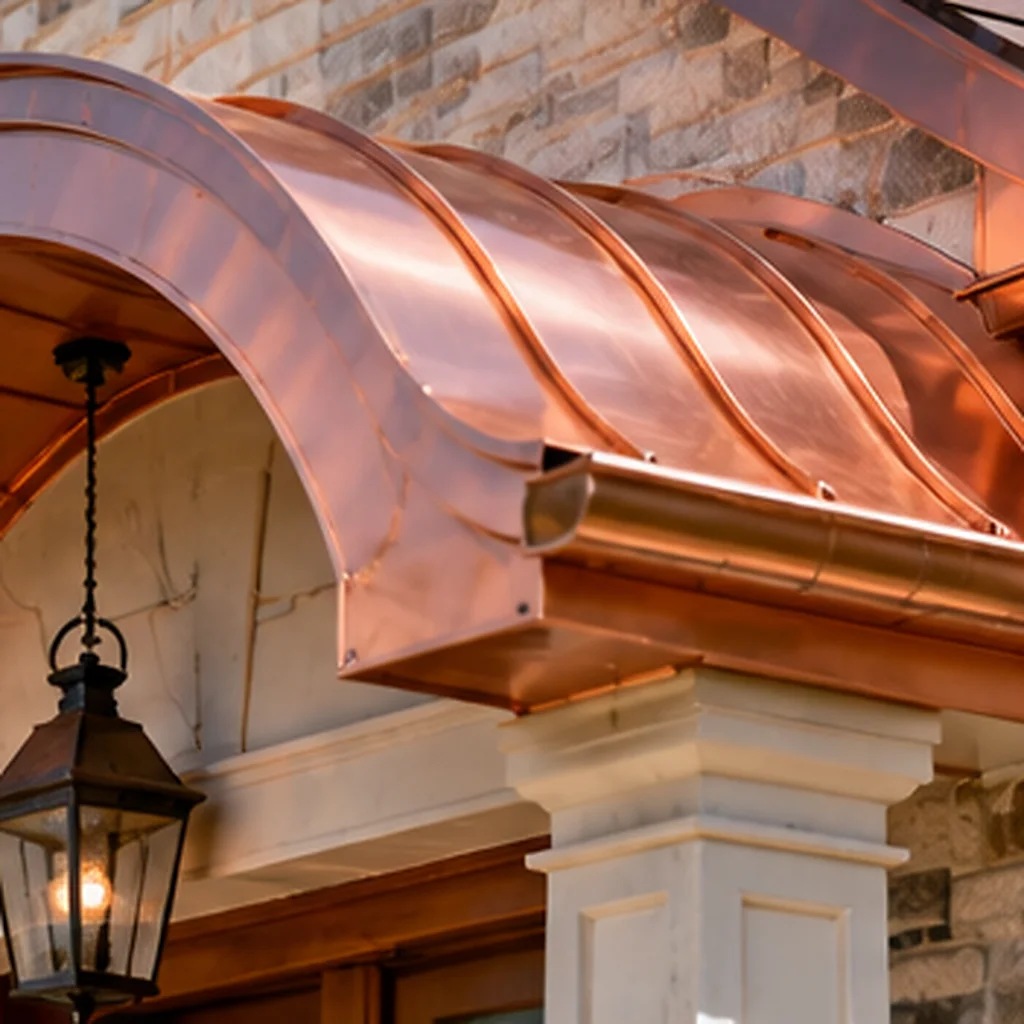
Copper can also be incorporated into dormers, bay windows, entry canopies, chimneys, turrets, roof transitions, and other architectural features instead of covering the entire roof.
Copper can perform effectively in cold and variable climates when the complete roofing system is properly designed and installed for the property. North Dakota’s weather makes snow management, water drainage, wind exposure, hail, freeze-thaw cycles, and temperature-related movement important considerations.
Proper roof geometry, underlayment, flashing, drainage, and snow-management details help control water as snow accumulates, melts, and refreezes. Copper’s smooth surface can also influence how snow and ice move across the roof, so the overall roof design should be evaluated rather than relying on the material alone.
Repeated freezing and thawing can place stress on roofing components and vulnerable transition points. Properly designed flashing, seams, valleys, penetrations, and water-management details help reduce opportunities for moisture intrusion.
Copper is durable and highly workable, but it can still dent from severe impact. Wind and hail performance depends on the specific roofing assembly, attachment method, roof geometry, installation quality, and applicable product or assembly testing.
A generic wind-speed or impact-resistance rating should not be assigned to copper roofing as a material. Any specific tested rating must come from the applicable roofing product or complete assembly.
Copper expands when heated and contracts when cooled. Proper copper roofing systems are designed to accommodate this thermal movement through appropriate seams, clips, fasteners, joints, and detailing.
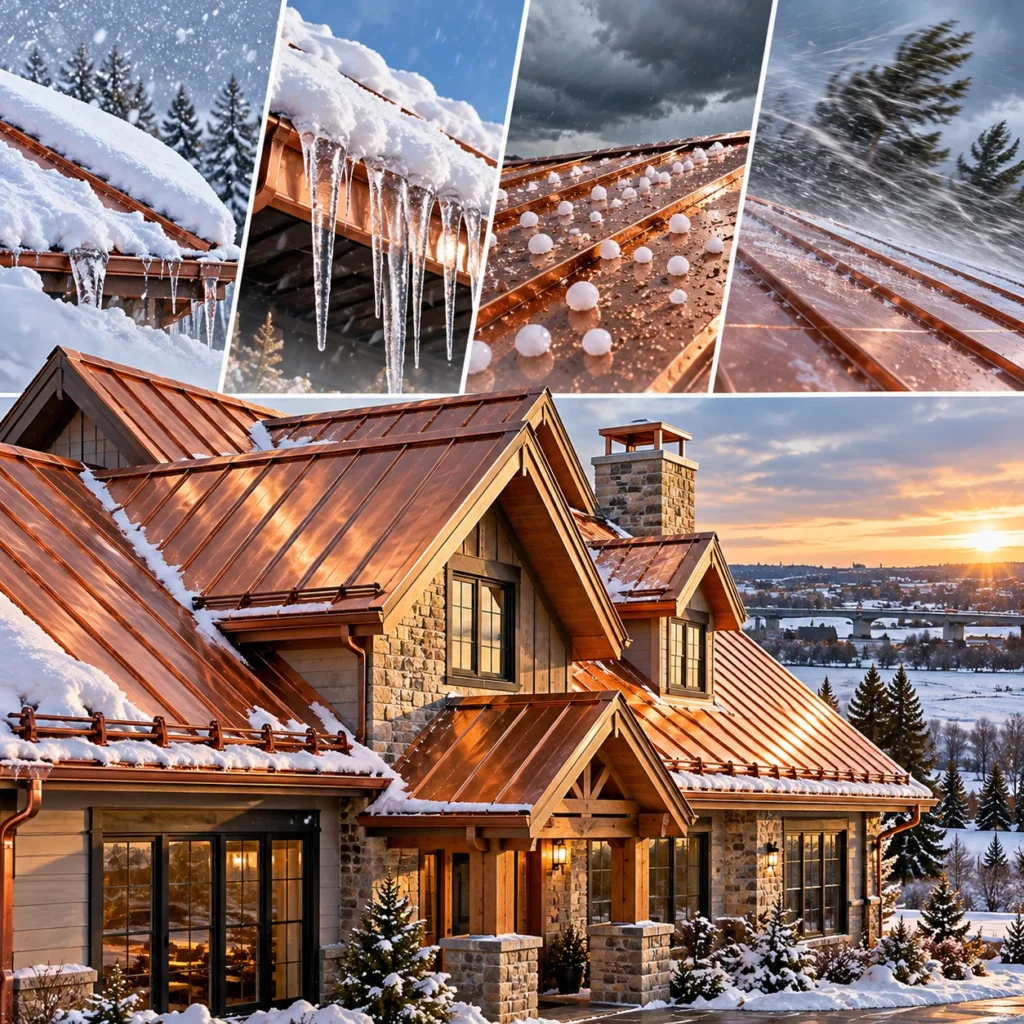
Copper is often selected when property owners want a premium roofing material that combines architectural character with long-term performance. Its natural patina gives the roof an evolving appearance, while copper’s malleability makes it useful for complex roof shapes, custom flashing, dormers, chimneys, turrets, and other architectural details.
Copper can also be attractive for property owners who value material longevity and recyclability. However, it carries a higher initial investment than many conventional roofing materials and requires proper installation.
Copper roofing can provide a distinctive appearance and long-term performance, but its higher upfront cost and specialized installation requirements make it a different investment from conventional roofing materials.
Long potential service life when properly designed and installed
Natural patina that changes the appearance over time
Strong corrosion resistance
High architectural flexibility
Suitable for complex roof shapes and custom details
Recyclable material
Relatively lightweight compared with some traditional roofing materials
Generally low routine maintenance when properly installed
Higher initial cost than many conventional roofing materials
Specialized installation and detailing requirements
Copper pricing can fluctuate
Severe impact can dent the surface
Thermal expansion and contraction require proper movement detailing
Incompatible metals can contribute to galvanic corrosion
Copper is not the right choice for every property, roof design, or budget
The right choice depends on the property’s structure, architectural goals, budget, expected service life, and installation requirements.
Copper roofing is generally a premium investment compared with asphalt shingles and many standard metal roofing systems. There is no single copper roof price that accurately applies to every property because project complexity, material selection, labor, and current copper pricing can significantly affect the final cost.
A detailed property inspection provides a more useful estimate than a generic national price range.
A properly designed and installed copper roof can remain serviceable for many decades and may exceed a century under suitable conditions. Actual service life depends on copper quality, installation workmanship, thermal movement detailing, environmental exposure, compatible materials, maintenance, and the performance of the complete roofing system.
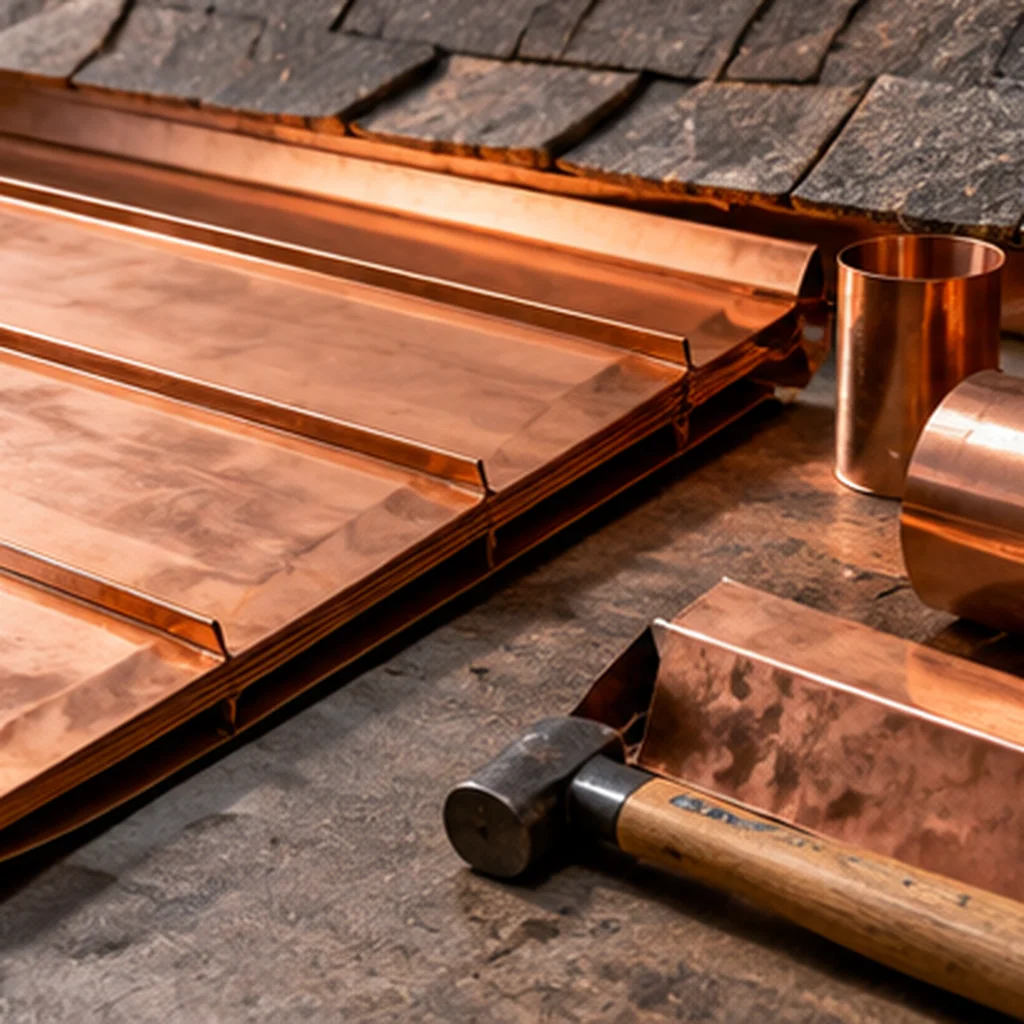
Copper changes color because its surface reacts with oxygen, moisture, and environmental conditions. The resulting oxidation gradually changes the appearance of the metal and can eventually produce the familiar blue-green protective patina associated with historic copper roofs.
Bright Copper: New copper typically has a bright metallic reddish-orange appearance.
Brown & Bronze: Oxidation gradually darkens the surface and produces brown or bronze transitional tones.
Darker Oxidation: Continued exposure changes the surface further as oxidation develops.
Blue-Green Patina: Under suitable environmental conditions, the surface can eventually develop a blue-green patina.
There is no universal timeline. Patina development depends on moisture, humidity, air quality, rainfall, sunlight, climate, roof pitch, and environmental exposure.
A copper roof is a complete roofing assembly rather than simply a layer of copper over a building.
The visible roofing material provides the primary exterior surface and architectural appearance.
Standing seam and other joining methods connect copper sections while allowing the system to manage water and movement.
Appropriate fasteners and clips secure the copper while accommodating the movement required by the selected roofing system.
Underlayment provides an additional layer of water protection beneath the copper roofing.
Flashing protects vulnerable transitions around chimneys, walls, valleys, skylights, penetrations, eaves, and other areas where water could enter.
Proper drainage components collect and direct water away from the roof and building.
Copper expands and contracts as temperatures change. A properly designed copper roofing system accounts for this movement through appropriate seams, clips, fastening methods, joints, and detailing.
The system should allow copper to move naturally rather than unnecessarily restricting the material. This is particularly important in climates such as North Dakota, where seasonal temperature changes can be substantial.
Thermal movement is one of the most important technical distinctions between a professionally designed copper roofing system and a simple sheet-metal application.
Yes. Copper roofing can be used on residential and commercial buildings when the structure, roof configuration, material specifications, and installation requirements are appropriate.
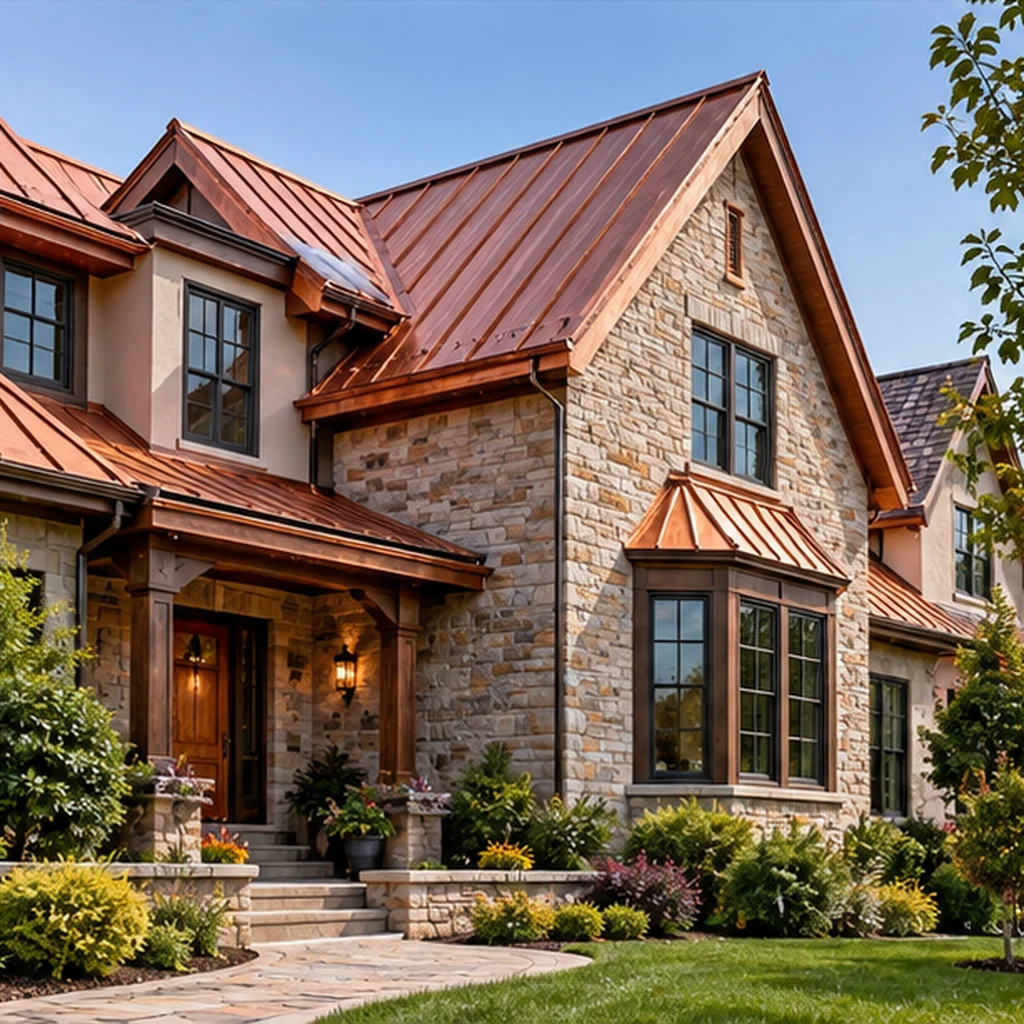
Copper can complement traditional, modern, luxury, historic, and custom homes. Its ability to be shaped around complex architectural features makes it particularly useful for properties where appearance and detailing are important.
Yes. Copper is well suited to many historic and custom architectural applications because it can be formed around complex transitions and detailed features. It may be used around: Dormers, Chimneys, Turrets, Bay windows, Entry canopies, Decorative roof features, Complex transitions, Historic projects may require additional attention to existing materials, architectural character preservation requirements, and custom fabrication.
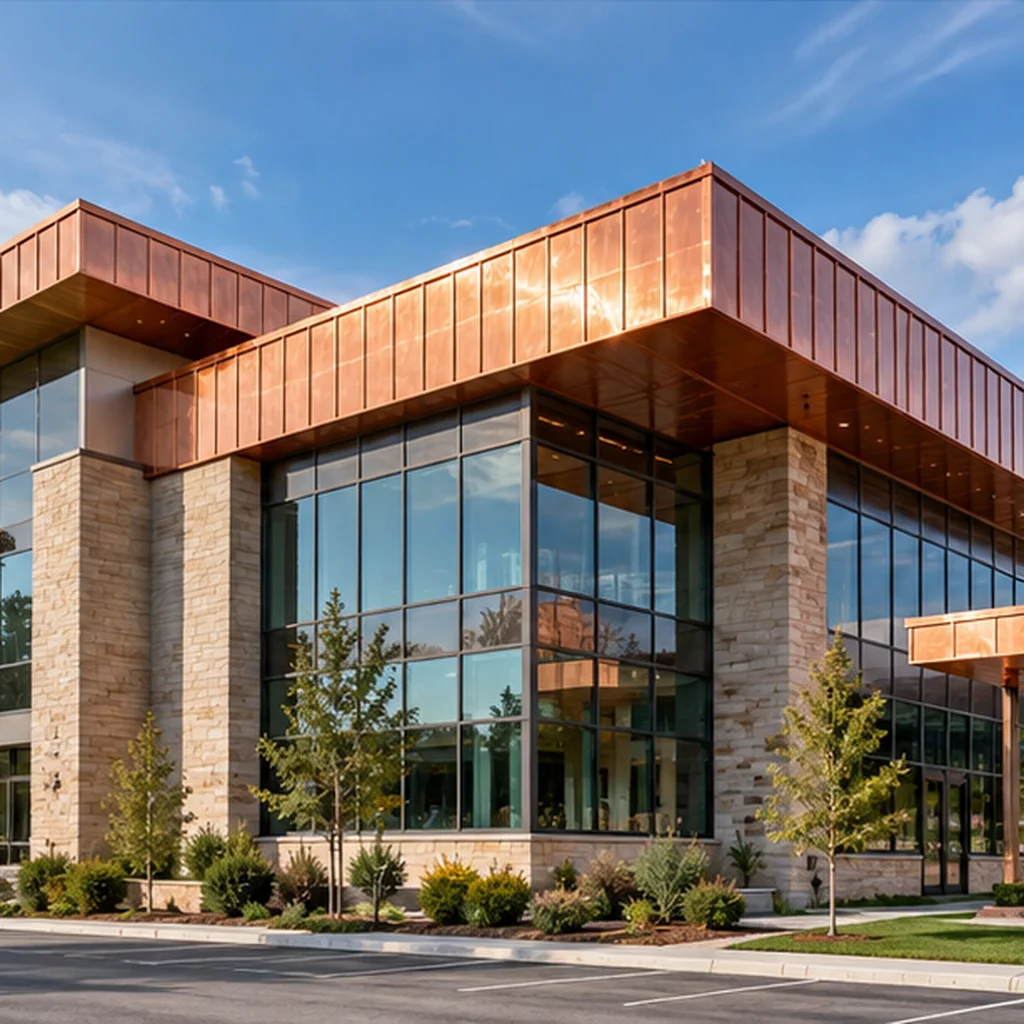
Commercial buildings can use copper for complete roofing systems or selected architectural areas such as entrances, towers, parapets, dormers, canopies, and other distinctive features.
A property does not necessarily need a complete copper roof to benefit from copper's architectural appearance. Copper accents can be used on selected areas such as dormers, entryways, chimneys, bay windows, turrets, or transitions. This can create a distinctive architectural feature while limiting the amount of copper required for the project.
Professional copper roof installation requires careful planning because the system must manage water while allowing copper to respond naturally to temperature changes.
The existing roofing system, roof deck, slope, drainage, flashing, penetrations, ventilation, and overall roof condition are evaluated before installation.
Damaged or unsuitable decking and supporting components are addressed before the new copper roofing system is installed.
Appropriate underlayment and water-management materials are installed according to the selected roofing system and project requirements.
Valleys, chimneys, walls, skylights, penetrations, eaves, and other vulnerable areas receive carefully planned flashing and drainage details.
Copper panels, standing seam systems, shingles, or other selected components are installed according to the roof design.
Seams, clips, fasteners, joints, and attachment points are designed to accommodate thermal expansion and contraction.
The completed roof is reviewed for alignment, seams, flashing, drainage, penetrations, water-management details, and overall installation quality.
Copper roofing requires specialized attention to material movement, flashing, water management, architectural details, and compatible components. The contractor’s role is not simply to install copper panels but to make sure the complete roofing system is appropriate for the property. Rooftop Renovation & Exteriors currently identifies itself as a family-owned, licensed, and insured roofing company serving North and South Dakota, with residential and commercial roofing services. Its official roofing page also emphasizes evaluating the entire roofing system and recommending solutions based on property conditions, budget, and long-term protection needs.
Our work considers the North Dakota environment, including snow, ice, wind, hail, freeze-thaw cycles, and seasonal temperature changes.
Rooftop Renovation states that it has served the Bismarck–Mandan region since 2016 and reports more than 25 years of roofing and construction experience.
Copper roofing requires project-specific planning. The scope should account for material selection, flashing, deck condition, labor, movement detailing, drainage, and installation requirements.
Copper roofing can be coordinated with other exterior components, including gutters, downspouts, flashing, siding, and architectural details.
Professional licensing and insurance provide important protection for the property owner and roofing team during the project.
For related roofing options, you can also explore Rooftop Renovation’s Roofing Services and Roof Installation Services.
Rooftop Renovation’s Copper Roof page features a customer-reported project involving a 2,800-square-foot residential home, a six-day installation, custom chimney flashing, and historic architectural detailing. The testimonial also describes differences in patina development associated with the home’s south-facing exposure.
This project illustrates how a copper roof can involve custom fabrication, architectural detailing, exposure considerations, and careful installation rather than simply replacing one roofing material with another.
Trustindex verifies that the original source of the review is Google. Rooftop recently replaced all shingles and installed a solar attic fan for me. All work was completed satisfactorily and within promised time frames. They did an excellent job of clean-up after work was completed.Posted on GoogleTrustindex verifies that the original source of the review is Google. Shingles were replaced. I was happy with the process. Workers were very helpful and work was completed in a very timely manner and the yard was cleaned up before they leftPosted on GoogleTrustindex verifies that the original source of the review is Google. Rooftop Renovations did an outstanding job on our home. From start to finish, they communicated clearly and kept us informed every step of the way. They arrived right on schedule and completed the entire project professionally in just one day. We're extremely pleased with the results — thank you!Posted on GoogleTrustindex verifies that the original source of the review is Google. Professional, quality, and reliable!Posted on GoogleTrustindex verifies that the original source of the review is Google. Job well done!Posted on GoogleTrustindex verifies that the original source of the review is Google. Tyler and team were very professional and friendly. We've used them multiple times and they always do a great job.Posted on GoogleTrustindex verifies that the original source of the review is Google. They were fast and did a great job. No issues at all. Recommend them to do more work around the statePosted on GoogleTrustindex verifies that the original source of the review is Google. Very impressed with this business and the crew. They worked hard, got a big project done efficiently. Appreciate their hard work. The new roofs in our complex look great!!Posted on GoogleTrustindex verifies that the original source of the review is Google. Tyler and the crew at Rooftop Renovation are a 5 star organization and I have had two jobs done by them and they are truly fist class in all they so with siding and roofing and gutters. Couldn't recommend them any higher.Posted on GoogleTrustindex verifies that the original source of the review is Google. Our roof replacement was part of a much larger roof replacement project at our condo due to hail damage. We were impressed with the professional Management of all phases of striping and replacing the roof. Excellent attention to such details as proper cleanup
Copper generally requires less routine maintenance than many conventional roofing materials, but it is not completely maintenance-free. Periodic inspection can identify damaged panels, loose components, flashing problems, drainage issues, debris accumulation, and conditions around roof penetrations.
Maintenance should focus on preserving the complete roofing system rather than trying to prevent the natural development of copper’s patina.
Cleaning should depend on the desired appearance and the condition of the copper. If the goal is to preserve the natural patina, aggressive cleaning methods should be avoided.
Harsh chemicals and improper cleaning techniques can alter the copper surface and affect the appearance of the patina.
Pressure washing is generally not an appropriate routine cleaning method for copper roofing. High-pressure water and harsh chemicals can damage the surface and interfere with the natural patina. When cleaning is necessary, the method should be selected according to the roofing system, copper condition, and desired appearance.
Copper should be installed with compatible materials because contact between dissimilar metals can create galvanic corrosion under suitable moisture conditions.
This consideration can apply to:
Proper material compatibility should be considered during the design and installation stage rather than after corrosion develops.
You can install solar panels on some copper roofing systems, but you must carefully plan the attachment method and material compatibility.
The mounting system should avoid unnecessary roof damage and should account for potential interaction between copper and dissimilar metals. Professional evaluation is particularly important when solar attachments, penetrations, clamps, or other metal components are being considered.
Copper can be worth the investment for property owners who prioritize long-term service life, architectural appearance, material character, and custom detailing. Its higher initial cost means it should be evaluated against the property’s design, budget, ownership period, and long-term roofing goals.
Copper roofing costs vary substantially based on roof size, geometry, pitch, copper thickness, system type, flashing, underlayment, labor, accessibility, roof removal, deck repairs, gutters, and current copper market pricing. A property-specific estimate is more reliable than a universal price-per-square-foot figure.
Copper does not rust in the same way iron or steel does. Instead, it oxidizes and gradually develops a protective patina. The appearance and speed of this process depend on environmental conditions.
Copper can be suitable for cold climates when properly designed and installed. Snow, ice, freeze-thaw cycles, flashing, drainage, wind, and thermal movement should all be considered for North Dakota properties.
Yes. Copper expands when heated and contracts when cooled. Proper roofing systems accommodate this movement through appropriate seams, clips, fasteners, joints, and installation details.
There is no single best copper roofing system for every property. Standing seam, copper panels, shingles, tiles, and architectural accents serve different design and installation requirements.
Standing seam copper roofing uses continuous copper panels with raised seams joining adjacent sections. Depending on the system, concealed clips or other attachment methods allow the panels to accommodate thermal movement while providing a continuous water-management surface.
Copper panels are larger sections used in systems such as standing seam roofing, while copper shingles are individual pieces installed in overlapping courses. Panels can provide cleaner continuous lines, while shingles can provide more traditional architectural detailing.
In some situations, an overlay may be possible, but the decision depends on the existing roofing system, building requirements, structural conditions, roof deck, local code, and selected copper system. A professional inspection should determine whether an overlay or complete tear-off is appropriate.
Yes. Copper can be particularly suitable for historic and custom properties because it can be formed around chimneys, dormers, turrets, transitions, and other architectural details.
Installation time varies according to roof size, complexity, material type, existing roof condition, custom fabrication, flashing requirements, weather, and site accessibility. A project-specific schedule should be established after inspection.
Yes. Copper can be installed on selected architectural areas instead of the entire roof. Dormers, chimneys, entry canopies, bay windows, turrets, and transitions are common types of areas where copper can provide a distinctive visual feature.
A copper roof is a long-term investment in both your property’s protection and its architectural character. Before selecting a system, it helps to evaluate the roof structure, design, copper type, flashing, thermal movement, material compatibility, maintenance needs, and North Dakota weather exposure.
Rooftop Renovation & Exteriors can help you evaluate options, including standing-seam copper roofing, copper panels, copper shingles, architectural accents, repairs, or replacements, based on your property’s condition and project goals.
Whether you are building a custom home, restoring a historic property, replacing an aging roof, or adding copper architectural details, a professional evaluation can help you understand the appropriate system and project scope before work begins.
