Spanish tile roof installation creates a distinctive architectural finish while providing a durable roofing system designed around the property’s structure, weather exposure, and drainage requirements. A successful installation involves much more than placing curved tiles over a roof. The roof deck, structural framing, underlayment, flashing, tile profile, fastening method, eaves, hips, ridges, and water-shedding details all need to work together.
Rooftop Renovation & Exteriors provides Spanish tile roofing solutions for property owners in Bismarck, Mandan, and surrounding North Dakota communities. We can evaluate the existing roofing system, discuss tile options, identify structural and installation considerations, and develop a project approach suited to the property.
Considering Spanish tile roofing for your home or commercial property? Start with a professional roof evaluation before selecting materials or beginning installation.

A Spanish tile roof is a roofing system that uses curved or shaped tiles to create the traditional appearance associated with Spanish, Mediterranean, Mission, and related architectural styles. Depending on the product, Spanish-style roofing can use clay, terracotta, concrete, or other purpose-designed tile materials.
The visible tile is only one part of the system. A properly planned Spanish tile roof also involves the roof deck, underlayment, flashing, attachment components, drainage, and supporting structure. The combination of these components helps manage water and weather exposure while maintaining the intended architectural appearance.
For properties in Bismarck and Mandan, local conditions also matter. Snow, wind, hail, cold temperatures, and freeze-thaw cycles can affect roofing materials and installation details, so the complete assembly should be considered rather than evaluating the tile by appearance alone.
Serving Bismarck, ND
Combined Roofing & Construction Experience
Spanish tile roofing is often chosen because the roof becomes an important part of the property’s architectural character. Curved profiles, natural clay tones, blended colors, and distinctive shadow lines can complement stucco, masonry, stone, custom homes, and Mediterranean-inspired architecture.
A well-planned Spanish tile roofing system can offer several practical and aesthetic advantages:
Spanish tile is not automatically the right choice for every building. Roof structure, roof pitch, tile availability, installation requirements, budget, maintenance expectations, and local weather exposure should all be considered before making a final material decision.
Spanish tile roofing can provide long-term architectural and functional benefits, but homeowners should understand the trade-offs before investing in a tile system. The most important considerations usually involve the roof's weight, installation complexity, upfront cost, maintenance, and the condition of the supporting structure.
Spanish tile can provide distinctive architectural character, durable material performance, fire-resistant characteristics for qualifying products, and a wide selection of colors and profiles. Some clay tiles may also be suitable for reuse when they remain structurally sound and compatible with the proposed roofing system.
Tile roofing can have a higher initial cost than some conventional roofing materials. Depending on the selected system, the roof may also require structural evaluation or reinforcement. Individual tiles can crack from impact, handling, severe weather, or installation-related problems, and replacement work may require matching the existing profile, size, color, and finish.
Understanding these considerations before installation helps property owners compare the complete roofing system rather than comparing tile prices alone.
Spanish roof tile terminology varies between manufacturers, and not every profile is available or appropriate for every roofing project. The actual product should be selected according to the property’s architecture, roof design, structural requirements, manufacturer specifications, and local installation conditions.
Barrel tile has a rounded profile that creates the classic curved appearance associated with traditional Spanish and Mediterranean roofing. It can produce strong shadow lines and a more handcrafted architectural look.
S-tile uses an alternating curved profile that creates a continuous wave across the roof. This profile can provide the appearance associated with Spanish-style roofing while following a defined installation system.
Mission-style roofing uses profiles designed to recreate the traditional pan-and-cover appearance found on historic and Mediterranean-inspired buildings. Some systems use separate components rather than a single interlocking profile.
Two-piece Mission systems generally combine separate pan and cover components. Because installation details can differ from other tile profiles, the specific manufacturer's requirements should be followed for the selected product.
Some manufacturers offer lower-profile tile systems that provide a cleaner appearance while retaining the visual character of tile roofing. These may be considered for contemporary homes and properties where a less pronounced roof profile is preferred.
Spanish roof tiles can be available in natural clay tones, terracotta shades, weathered finishes, earth tones, and blended color combinations. Color selection should consider the property's exterior materials, surrounding architecture, roof size, and desired appearance.
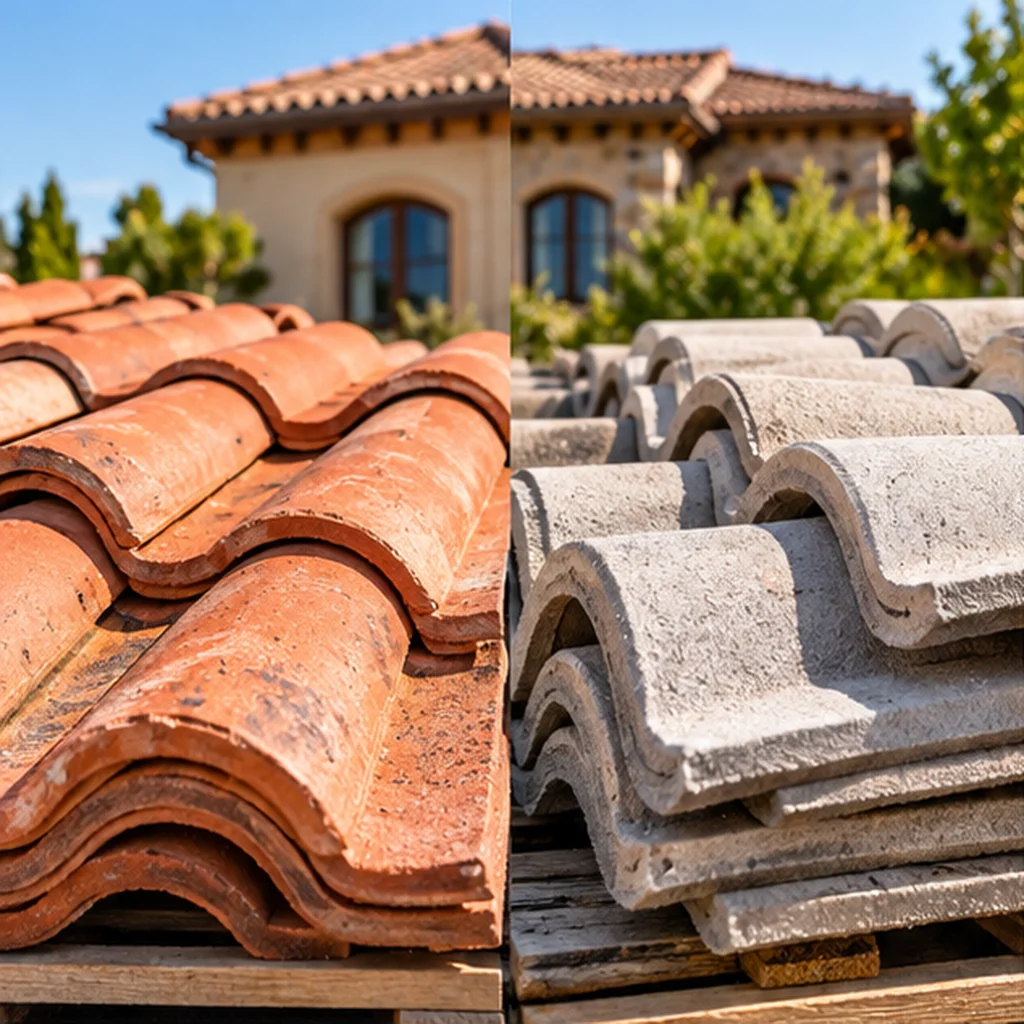
Clay and concrete are two common material categories for tile roofing, but they have different characteristics and should be evaluated according to the actual products being considered.
Clay and terracotta tiles are made from fired clay and are often selected for their natural appearance and traditional architectural character. Color variation and weathering can contribute to the appearance of an aged or historic-style roof.
Concrete roof tiles are cement-based and can offer a broad range of profiles, colors, and finishes. Modern concrete tile systems can also be designed for different architectural styles and performance requirements.
The exact weight, appearance, durability, installation requirements, and expected service life depend on the specific product and complete roofing assembly. For that reason, product specifications should be reviewed before making a clay-versus-concrete decision.
A Spanish tile roof may require structural evaluation or reinforcement because tile systems can be considerably heavier than some other roofing materials. The answer depends on the selected product, existing framing, roof configuration, roof deck, building design, and applicable structural requirements.
A professional evaluation should consider the existing framing, roof spans, deck condition, proposed tile system, existing roofing layers, expected environmental loads, and the requirements applicable to the property. Structural work should be identified before the tile installation begins.
Avoid relying on generic internet weight figures when planning a tile roof. The actual product specifications and complete roofing assembly should determine the expected roof load. This is particularly important in North Dakota, where snow loading needs to be considered as part of the overall roof design.
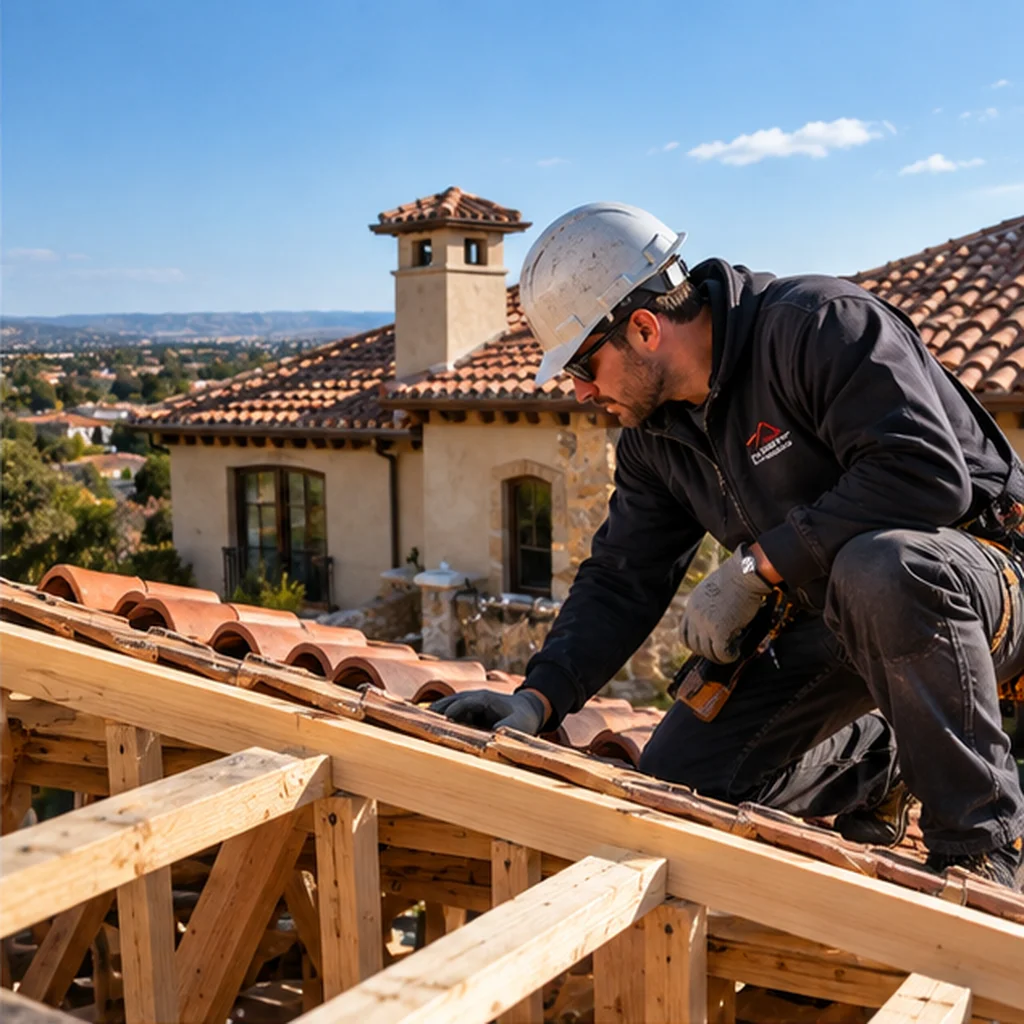
Spanish roof tiles are installed as part of a complete roofing assembly rather than acting as the only layer responsible for water management. Depending on the selected system, the roof can include the roof deck, underlayment, flashing, starter components, attachment systems, field tiles, hip and ridge tiles, and drainage details.
The roof deck provides the underlying structural surface for the roofing assembly. Its condition should be evaluated before a new tile system is installed.
Underlayment provides an additional water-shedding layer beneath the tile. The appropriate material and installation method depend on the roofing system, roof design, manufacturer requirements, and applicable building requirements.
Flashing helps manage water around valleys, walls, chimneys, vents, roof edges, and other penetrations. Proper flashing is essential because these transition points can become vulnerable to water intrusion when poorly detailed.
Eaves, gutters, valleys, and other drainage components help direct water away from the roof and building. Their relationship with the tile layout should be considered during installation.
A professional Spanish tile roof installation follows a planned sequence so the structure, water-shedding layers, tile, and attachment components work together as one system.
The roof structure is evaluated before materials are installed. This helps determine whether the building can support the proposed tile system and whether structural work may be required.
The roof deck and framing are checked for deterioration, moisture damage, movement, or other conditions that could affect installation. Necessary repairs should be addressed before covering the structure.
The appropriate underlayment is installed according to the selected roofing system and manufacturer requirements. This layer plays an important role in water management beneath the tile.
Flashing is installed around vulnerable roof transitions and penetrations. Valleys, walls, chimneys, vents, edges, and other areas need appropriate detailing so water is directed away from the building.
The first course establishes the layout of the tile system. Starter components, eave projection, drainage, and the relationship between the roof edge and gutter system should be considered before field tiles are installed.
Field tiles are installed according to the selected profile, roof design, roof pitch, layout, and manufacturer requirements. Consistent alignment and appropriate overlap contribute to the intended appearance and water-shedding performance.
Tile attachment can involve approved mechanical fasteners, clips, wire systems, mortar, or other methods depending on the specific product and application. There is no universal fastening method for every Spanish tile roof.
Hip and ridge tiles complete major roof transitions. These areas require appropriate attachment and water-management details based on the selected system.
The completed roof should be reviewed for tile alignment, flashing, drainage, penetrations, attachment, visible damage, and other installation details before the project is considered complete.
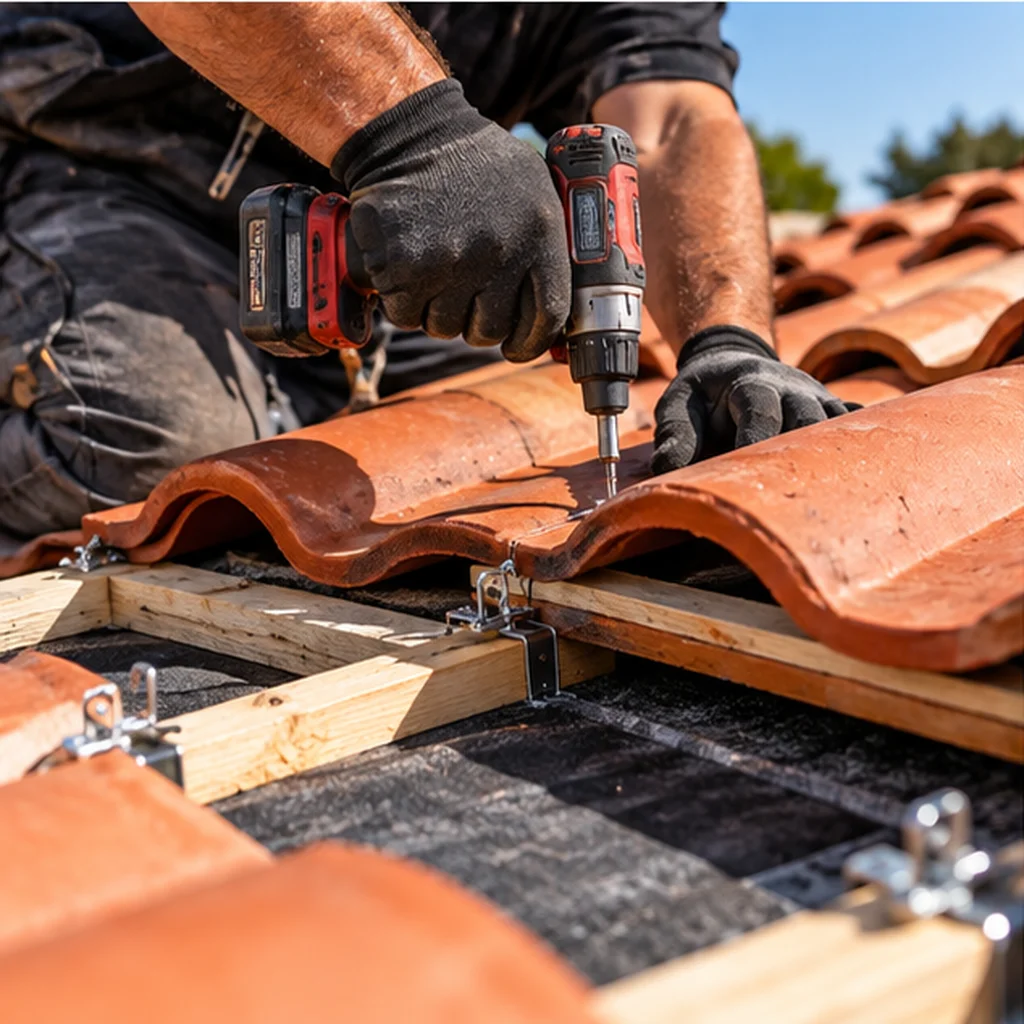
Spanish roof tiles can be attached using different methods depending on the tile profile, manufacturer requirements, roof pitch, wind exposure, roof design, and applicable installation requirements. Depending on the system, attachment may involve mechanical fasteners, clips, wire attachment, mortar, or other approved components. The selected method should be based on the actual product rather than assuming that one fastening approach applies to every Spanish tile roof.
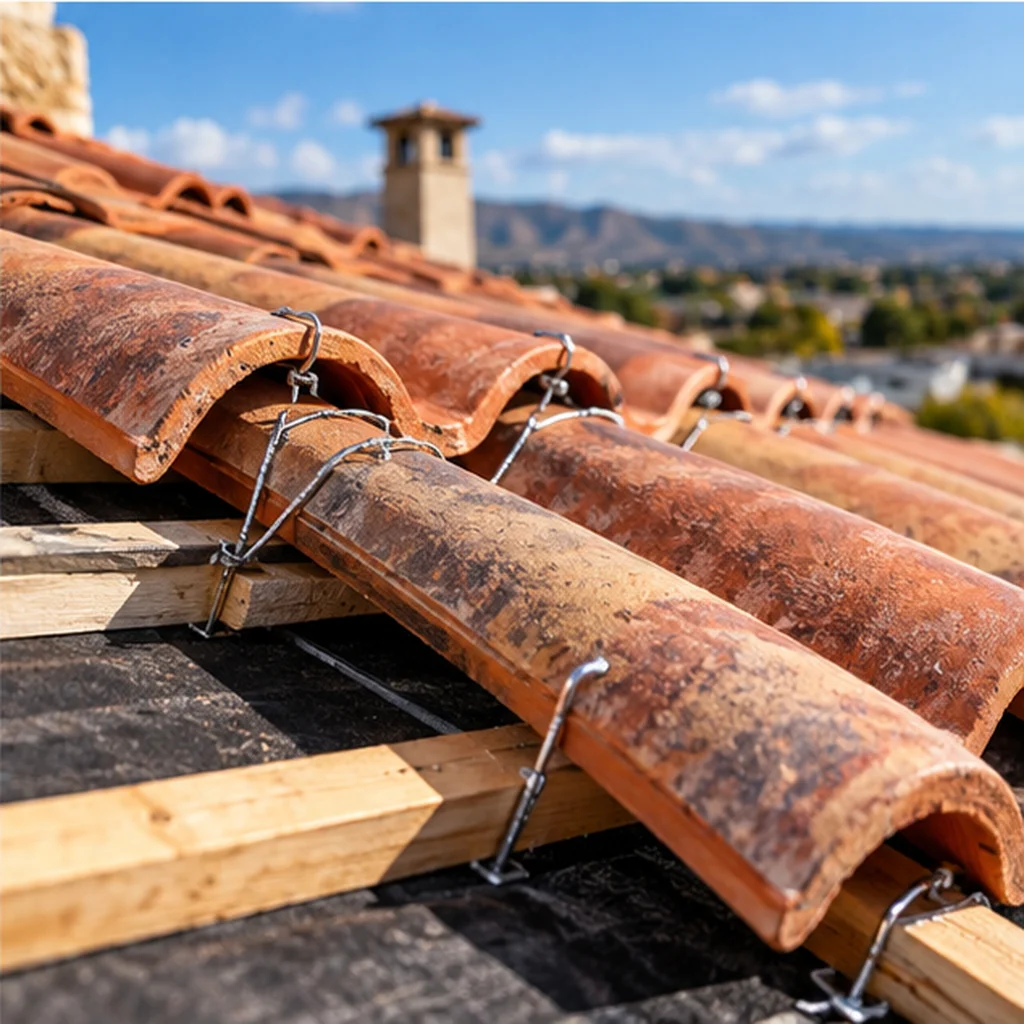
Fastening also needs to work with the underlayment, flashing, roof deck, tile layout, and roof edges. In other words, secure tile attachment is one part of a larger roofing system rather than an isolated installation step. For properties exposed to strong winds or severe weather, the attachment requirements should be evaluated carefully before installation.
Spanish tile roofing can be used in cold and snowy climates when the complete roofing system is appropriately designed and installed for those conditions. The suitability of a particular tile system depends on the product, structure, roof design, installation method, and local environmental loads.
Roof pitch, drainage, tile attachment, roof geometry, and snow-retention requirements should be evaluated for the individual property. Snow guards or other snow-retention components may be appropriate in some applications, but they should not be treated as universal requirements for every tile roof.
Repeated freezing and thawing can place stress on roofing materials and water-management details. Appropriate tile selection, underlayment, flashing, drainage, and installation practices can help the complete system manage these conditions.
Wind exposure should be considered when determining tile attachment and edge details. Hail can damage individual tiles or other roofing components, and the impact performance of a roof depends on the specific product and tested assembly.
There is no single Spanish tile roof installation cost that applies to every property. Pricing depends on the complete roofing assembly, the selected tile, roof complexity, structural requirements, labor, preparation, and site conditions.
Important cost factors can include:
Trustindex verifies that the original source of the review is Google. Rooftop recently replaced all shingles and installed a solar attic fan for me. All work was completed satisfactorily and within promised time frames. They did an excellent job of clean-up after work was completed.Posted on GoogleTrustindex verifies that the original source of the review is Google. Shingles were replaced. I was happy with the process. Workers were very helpful and work was completed in a very timely manner and the yard was cleaned up before they leftPosted on GoogleTrustindex verifies that the original source of the review is Google. Rooftop Renovations did an outstanding job on our home. From start to finish, they communicated clearly and kept us informed every step of the way. They arrived right on schedule and completed the entire project professionally in just one day. We're extremely pleased with the results — thank you!Posted on GoogleTrustindex verifies that the original source of the review is Google. Professional, quality, and reliable!Posted on GoogleTrustindex verifies that the original source of the review is Google. Job well done!Posted on GoogleTrustindex verifies that the original source of the review is Google. Tyler and team were very professional and friendly. We've used them multiple times and they always do a great job.Posted on GoogleTrustindex verifies that the original source of the review is Google. They were fast and did a great job. No issues at all. Recommend them to do more work around the statePosted on GoogleTrustindex verifies that the original source of the review is Google. Very impressed with this business and the crew. They worked hard, got a big project done efficiently. Appreciate their hard work. The new roofs in our complex look great!!Posted on GoogleTrustindex verifies that the original source of the review is Google. Tyler and the crew at Rooftop Renovation are a 5 star organization and I have had two jobs done by them and they are truly fist class in all they so with siding and roofing and gutters. Couldn't recommend them any higher.Posted on GoogleTrustindex verifies that the original source of the review is Google. Our roof replacement was part of a much larger roof replacement project at our condo due to hail damage. We were impressed with the professional Management of all phases of striping and replacing the roof. Excellent attention to such details as proper cleanup
Yes, localized Spanish tile damage can sometimes be addressed by replacing individual broken or displaced tiles instead of replacing the entire roofing system. However, the visible damaged tile may not be the only issue that needs attention.
An inspection should consider the surrounding tiles, attachment system, underlayment, flashing, roof deck, and any evidence of moisture intrusion. This helps determine whether the problem is limited to a few tiles or indicates a broader roofing-system concern.
Existing clay tiles may also be reusable when they remain structurally sound and are compatible with the proposed roofing system. Reuse should be evaluated individually because age, previous installation, breakage, weathering, availability of matching pieces, and compatibility with new roofing components can affect the decision.
Matching replacement Spanish roof tiles can also require attention to profile, dimensions, color, texture, and finish, particularly on older or custom roofs.
Spanish tile installation requires attention to both the architectural appearance and the technical details beneath it. Rooftop Renovation & Exteriors serves property owners in Bismarck, Mandan, and surrounding North Dakota communities with residential and commercial roofing services.
Our approach starts with the property and existing roofing conditions rather than assuming that every building requires the same roofing solution. For a Spanish tile project, that means considering the structure, roof deck, tile selection, underlayment, flashing, fastening, drainage, roof design, and local weather exposure.
A professional roofing evaluation can also help determine whether the project is best approached as a new installation, complete replacement, structural upgrade, or localized repair. This gives the property owner a clearer understanding of the work before moving forward.
For broader roofing needs, you can also explore our Roofing Services in Bismarck, ND or learn more about Roof Installation in Bismarck, ND.
Rooftop Renovation & Exteriors provides Spanish tile roofing support for properties in Bismarck, Mandan, and surrounding North Dakota communities. Spanish tile projects are evaluated according to the property, roof structure, installation requirements, and local weather conditions. For locations outside the primary Bismarck–Mandan area, contact the team to confirm Spanish tile roofing availability for your property.
For property owners considering Spanish tile roof installation near Bismarck, ND.
Rooftop Renovation & Exteriors also lists Fargo, Jamestown, Dickinson, Sioux Falls, and Aberdeen within its broader service area. Spanish tile roofing availability can depend on the project type, property location, material requirements, and scheduling, so confirm coverage before planning a project outside the primary Bismarck–Mandan area.
The service life of a Spanish tile roof depends on the tile material, complete roofing assembly, installation quality, weather exposure, maintenance, and condition of the components beneath the tile. The tile itself may remain serviceable for a long period, while underlayment, flashing, or other components may require attention sooner.
They can be substantially heavier than some common roofing materials. The actual weight depends on the selected tile and complete roofing assembly, so product-specific specifications should be used when evaluating structural requirements.
They can be suitable for snowy climates when the roofing system is designed and installed appropriately for the local conditions. Structural capacity, tile attachment, drainage, flashing, roof pitch, and snow-retention requirements should all be considered.
Spanish tile is often used as a broader description of a Spanish-style roofing category, while barrel tile generally refers to a rounded tile profile. Terminology can vary between manufacturers, so the specific product profile should be confirmed when selecting materials.
An S-tile roof uses tiles with a curved S-shaped profile that creates a repeating wave across the roof. It can provide a Spanish or Mediterranean appearance while following the installation requirements of the selected product.
A two-piece Mission tile system uses separate pan and cover components to create the traditional appearance associated with Mission-style roofing. The exact installation method depends on the specific tile manufacturer and roofing system.
Often, localized tile damage can be repaired by replacing individual broken tiles. However, the surrounding roofing assembly should also be checked to determine whether the damage is isolated or related to a larger issue.
Some existing clay tiles can potentially be salvaged and reused when they remain structurally sound and compatible with the new roofing system. A professional evaluation should determine whether reuse is practical for the specific project.
Directly walking on roofing tile can create a risk of cracking or displacing individual pieces. Roof access and inspection should be performed using appropriate methods to minimize unnecessary damage.
A Spanish tile roof is both a roofing system and a major architectural feature of a property. Choosing the right tile is only the beginning. Structural capacity, roof preparation, underlayment, flashing, fastening, drainage, snow and wind exposure, and final installation details all contribute to the finished result.
If you are considering Spanish tile roof installation, replacement, or localized tile repair in Bismarck, Mandan, or a surrounding North Dakota community, a professional roof evaluation is the right place to begin.
Request a professional roof inspection and discuss your Spanish tile roofing project with Rooftop Renovation & Exteriors.
