
Half round gutter slope plays a critical role in controlling roof drainage and preventing water damage. When the slope is correct, rainwater flows smoothly without blockage or overflow. A wrong setup often leads to drainage failure and structural issues over time. We focus on practical, real-world solutions that improve long-term gutter performance. This guide helps you understand proper installation, common problems, and effective fixes.
Understanding the half round gutter slope for proper drainage
A properly designed half round gutter slope helps control how smoothly rainwater moves through the drainage system. When the slope is measured correctly, water flows toward the downspouts without sitting inside the gutter or spilling over the edges. We often check the gutter slope during roof inspection because many drainage problems begin with poor installation, roof-edge movement, or aging exterior materials. If the slope is too flat, standing water can collect, debris can build up, and the gutter may become heavy over time. If the slope is too steep, water may rush too quickly and overflow near joints, corners, or downspout openings.
In colder areas like Bismarck, a poor slope can also increase freeze-thaw stress, ice buildup, and long-term gutter damage. For homeowners planning upgrades, combining gutter correction with proper roof installation helps improve drainage balance and exterior stability. Early inspection is always the better approach because it protects the roof edge, extends gutter life, and helps prevent costly structural repairs.
Why does correct gutter pitch directly impact roof protection?
Correct gutter pitch is one of the first details we check because even a small slope error can affect how water leaves the roof. A properly pitched gutter keeps rainwater, snowmelt, and storm runoff moving toward the downspout instead of sitting near the roof edge. In Bismarck, freeze-thaw cycles can make poor drainage worse by turning trapped water into ice and adding pressure to gutter joints. When half round gutters are too flat, water may overflow, soak fascia boards, stain siding, and collect around the foundation. When the pitch is too steep, water can move too quickly and miss the outlet during heavy rain. That is why accurate gutter slope measurement helps protect the roof line, soffits, siding, and foundation as one complete system. Pairing gutter correction with a roof repair inspection also helps find hidden edge damage before it becomes a larger leak problem.
Common problems caused by an incorrect gutter slope
In real field conditions, we frequently diagnose gutters not draining properly, slope issues caused by improper leveling, or structural movement. Over time, even small misalignments create drainage failure.
A major concern is gutter leaks due to the wrong slope, which usually starts at connection points where water sits too long. Homes exposed to seasonal snowmelt often require additional reinforcement or even siding protection due to water exposure around edges.
Common causes of slope failure
- Incorrect bracket spacing
- Poor initial leveling
- Structural shifting over time
- Debris is blocking the water flow
| Issue Type | Cause | Result |
| Flat slope | Poor installation | Water stagnation |
| Excess slope | Over-adjustment | Overflow at edges |
| Uneven slope | Structural shift | Leakage at joints |
We fix these issues by rebalancing pitch and restoring proper water flow efficiency in gutters.
Half Round gutter installation and water flow efficiency
A reliable rainwater drainage system depends on proper design, installation, and slope alignment. During projects, we often integrate gutter work with roof inspection and structural evaluation to ensure full system performance.
We also focus heavily on gutter pitch adjustment because even premium aluminum half round gutters fail without proper grading. In larger exterior upgrades, we sometimes combine gutter installation with deck or structural improvements for complete drainage control.
- Balanced pitch improves drainage speed
- Proper alignment reduces maintenance needs
- Aluminum systems require accurate leveling
- Structural checks prevent long-term issues
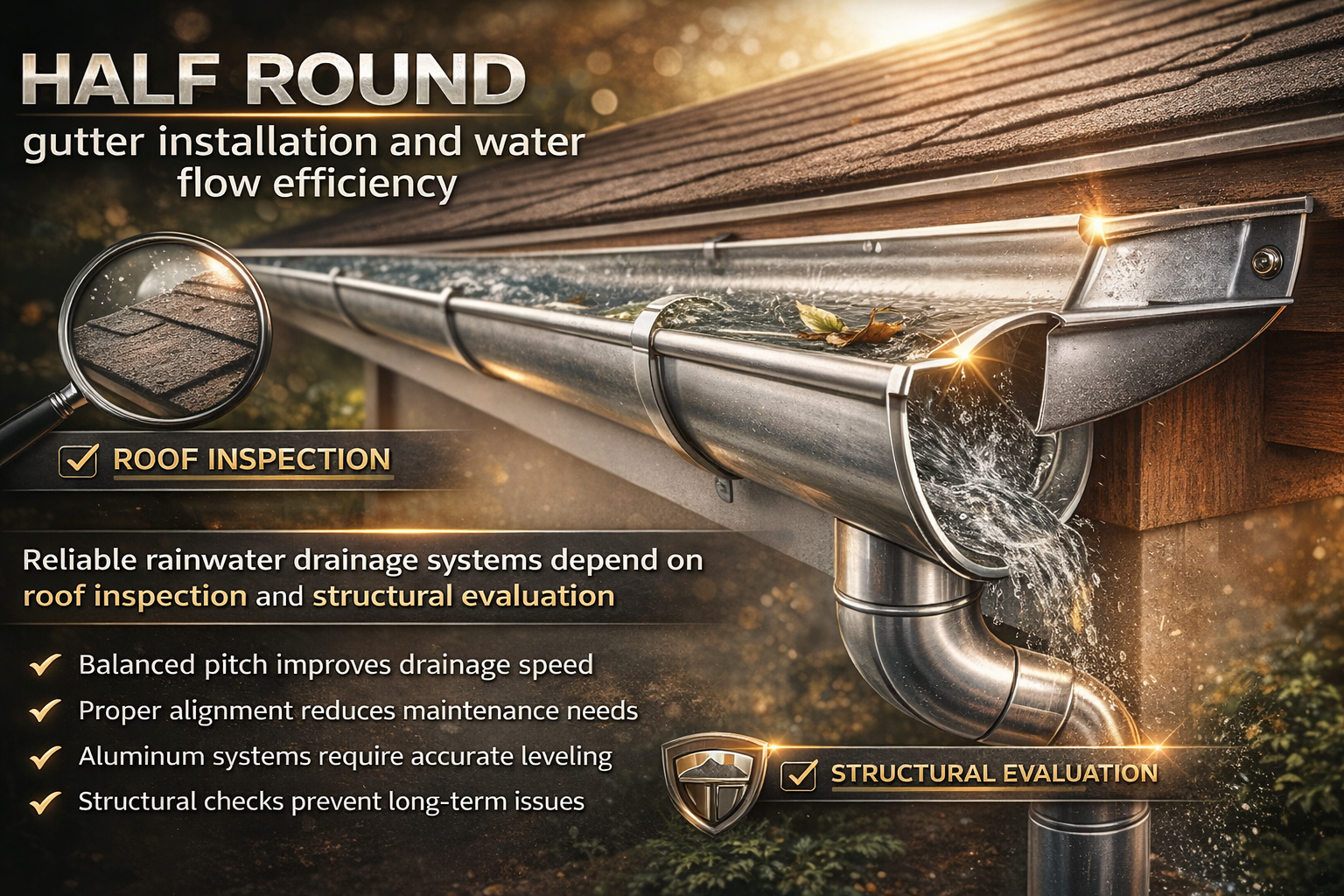
When done correctly, the system works silently and efficiently during heavy rainfall.
Maintenance tips for long-term gutter performance
Long-term gutter performance depends on regular care, not just proper installation.
When leaves, dirt, or roof debris collect inside the gutter, water flow becomes slow and uneven.
After winter, gutters should be checked because ice, snow, and temperature changes can affect slope and joint strength.
It is also important to inspect roof edges, window replacement areas, and exterior transitions where water may be redirected.
With simple seasonal maintenance, gutters stay stable, drain better, and help prevent costly exterior water damage.
- Clean gutters at least twice every year
- Check gutter slope after winter weather
- Clear leaves and debris from downspouts
- Inspect seams, brackets, and joint stability
- Look for water stains near siding, fascia, and windows
FAQs
What is the ideal half round gutter slope?
The ideal half round gutter slope is a slight continuous downward angle toward the downspout. It ensures smooth water movement without pooling or overflow.
How do I know if my gutter slope is wrong?
If you see standing water or overflow, your gutter slope for half-round gutters is likely incorrect. This is a common early warning sign.
Can the wrong slope damage my roof?
Yes. Poor slope leads to water overflowing from half-round gutters, which can damage fascia, siding, and foundation areas over time.
How often should the gutter slope be checked?
We recommend checking during seasonal roof inspection, especially after winter, when structural movement is common.
Do aluminum gutters need special slope settings?
Yes. Aluminum half round gutters require precise alignment because material rigidity affects long-term drainage stability.
Professional gutter support and local service
We handle full gutter correction, installation, and drainage optimization based on real field experience. When we fix half-round gutter slope issues, we also evaluate related systems like gutter, roof repair, and structural alignment to ensure long-term performance.
If you are dealing with overflow, leaks, or drainage failure, we can correct the root cause rather than applying temporary fixes. You can reach us through contract pages or explore our gutter services for detailed support.
We build systems that perform reliably through harsh North Dakota weather conditions and heavy seasonal rainfall.