
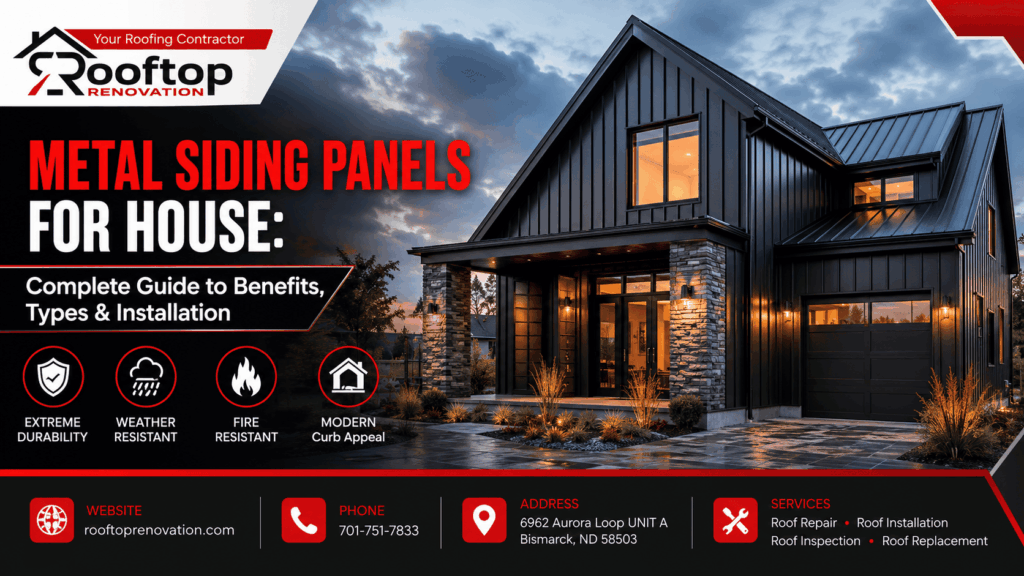
Metal siding panels for houses give you a strong, long-lasting exterior that performs well in harsh weather conditions like North Dakota winters. You get better protection, modern curb appeal, and lower long-term maintenance compared to traditional materials. We work with homeowners who want durable and energy-conscious exterior upgrades. In Bismarck and nearby areas, we often see metal siding outperform vinyl and wood in real field conditions. This guide helps you understand types, benefits, and installation from an experienced contractor’s perspective.
What do metal siding panels for houses really mean for modern homes?
When we talk about metal siding panels for houses, we mean a complete exterior cladding system built from materials like steel and aluminum designed to protect your home for decades. In our field experience across Bismarck, ND, homeowners often switch to metal siding for homes after dealing with moisture damage, warping, or repeated maintenance issues from wood or vinyl. These panels create a sealed protective layer that resists wind, snow, and temperature changes. You also get better long-term value compared to traditional siding systems.
We often integrate siding projects with other exterior upgrades like our siding services or full remodeling solutions, depending on the property’s condition. In North Dakota and South Dakota, temperature swings put stress on exterior materials, but metal handles expansion better than most alternatives. Many homeowners also pair siding upgrades with roof repair services to fully protect the building envelope. This combination improves durability and reduces long-term maintenance costs significantly.
Key benefits you get from metal siding panels for a house
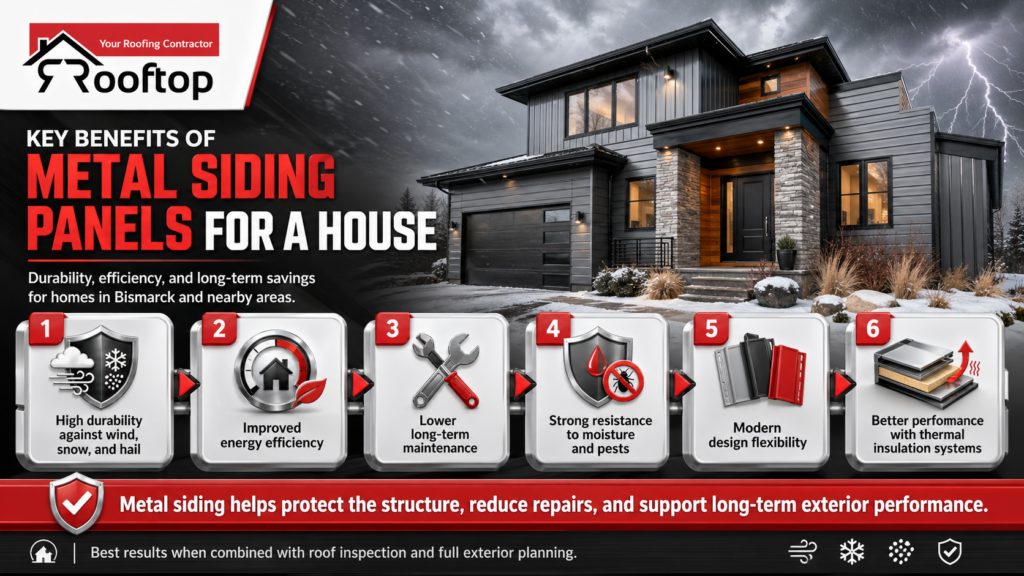
When we install metal siding panels for houses, we focus on durability, efficiency, and long-term savings. Homeowners in Bismarck and nearby areas often come to us after repeated siding failures caused by storms or moisture damage. Metal solves many of those issues because it resists cracking, rotting, and pest damage.
We also see strong performance when combined with roofing systems like roof installation for complete exterior protection. Over time, the structure stays stable with fewer repair cycles. Sustainability also plays a role, since sustainable building materials like steel and aluminum can be recycled without losing strength.
- High durability against wind, snow, and hail
- Improved energy efficiency of metal siding for houses
- Lower long-term maintenance requirements
- Strong resistance to moisture and pests
- Modern design flexibility for exterior upgrades
- Better performance with thermal insulation systems
From experience, homeowners who combine siding upgrades with roof inspection catch issues early and avoid costly structural repairs later.
Types, materials, and real performance comparison
Different types of metal siding panels for a house offer different strengths. We usually help homeowners choose between aluminum, steel, and corrugated designs based on climate and budget.
Aluminum resists corrosion well, while steel offers stronger impact resistance. Corrugated systems are more industrial but highly durable. In colder regions like North Dakota, we often pair siding upgrades with gutter systems to control water flow and prevent exterior damage.
| Material Type | Durability | Maintenance | Climate Suitability | Cost Level |
| Aluminum siding panels | Medium | Low | Mild climates | Medium |
| Steel siding panels | High | Low | Harsh winters | Medium–High |
| Corrugated metal siding | High | Medium | Rural homes | Medium |
| Vinyl siding | Low–Medium | Medium | Mild climates | Low |
We also see many homeowners combine siding replacement with window replacement to improve insulation and energy performance.
Installation process and what you should expect
Installing metal siding panels for houses requires proper planning and structural evaluation. We always inspect the home first before starting any exterior work. In many cases, we repair underlying issues during roof inspection services or siding prep work.
- Surface inspection and repair
- Moisture barrier installation
- Panel alignment and fastening
- Insulation integration
- Final sealing and quality check
We also coordinate siding upgrades with roof installation projects when full exterior replacement is needed. Proper installation directly affects performance, especially in harsh weather zones like Bismarck and Fargo.
Maintenance tips and long-term performance
Maintaining metal siding panels for houses is simple compared to wood or vinyl systems. We recommend seasonal inspections to check for debris or minor surface wear.
We often advise homeowners to combine siding care with snow removal services during the winter months to avoid ice buildup near exterior walls. Regular checks ensure long-term performance and protect structural integrity.
FAQs about metal siding panels for a house
How long do metal siding panels last?
Most systems last 30–50 years, depending on installation quality and material type.
Are metal siding panels better than vinyl siding?
Yes. Metal offers stronger durability and better weather resistance in harsh climates.
Do metal siding panels improve energy efficiency?
Yes, especially when paired with insulation systems during installation.
What is the cost of metal siding installation?
Costs vary based on material and home size, but steel provides the best long-term value.
Do metal siding panels require maintenance?
Only minimal maintenance, like seasonal cleaning and inspection, is needed.
Why do homeowners choose us for metal siding panels for houses?
We have completed exterior projects across Bismarck, Mandan, Fargo, and surrounding regions. Our experience shows that metal siding panels for houses perform best when installed with proper system integration.
We also provide full exterior support, including roof repair, siding upgrades, and structural improvements under one coordinated process.
If you are planning an upgrade, we can help you choose the right system based on your property’s condition. Contact us at or call 7017517833 to discuss your project. We design solutions that fit North Dakota’s weather conditions and long-term durability expectations.