
Installing a metal roof requires careful planning, correct materials, and proper fastening techniques to ensure long-term durability. Many homeowners in Bismarck and nearby areas choose metal roofing for its strength against harsh weather conditions. When you install metal roofing for a building, you improve energy efficiency and reduce long-term maintenance costs. This guide explains each step in a practical way based on real field experience. We will help you understand the full process so you can make informed decisions before starting your project.
Understanding metal roofing installation for buildings
When you install metal roofing for a building, you need to understand how every layer works together to protect the structure. We have seen many projects in North Dakota where small preparation mistakes lead to leaks and costly repairs later. That is why we always focus on correct planning before any installation starts.
We work with both residential and commercial projects where weather resistance plays a major role. Metal roofing performs best when installed with precision and proper spacing. You must also consider ventilation, insulation, and fastening methods to avoid future structural stress.
In most cases, we guide clients through:
- Roof surface inspection before installation
- Material selection based on climate
- Underlayment preparation for protection
- Proper alignment for metal sheets
- Drainage and slope planning
In our experience, preparation decides 60% of the project success. When we follow a structured system, metal roofing delivers strong performance for decades without major issues. If you need expert help, our team provides full support through our roof inspection service and professional roof installation solutions.
Step-by-Step metal roofing installation process
Before you begin to install metal roofing for a building, we always recommend preparing a complete checklist. A structured approach reduces mistakes and improves long-term performance.
The process starts with roof deck inspection and cleaning to make sure the surface is strong, stable, and free from debris. After that, roofing underlayment for a metal roof is installed to create a protective moisture barrier beneath the panels. Next, each metal panel must be measured and aligned correctly so the roof has even coverage and proper water flow. A secure metal roof fastening system is then installed to hold the panels in place against wind, snow, and storm pressure. Flashing is added around edges, valleys, and roof transitions to stop water from entering weak points. Finally, all joints and connection areas are sealed carefully for a weatherproof roofing installation that supports long-term durability.
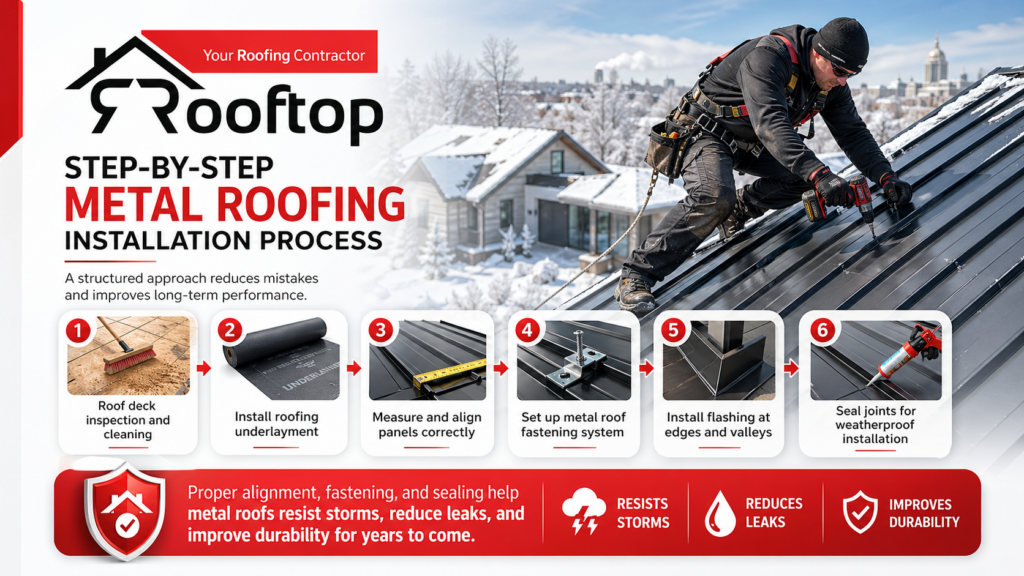
Once the installation begins, precision becomes critical. We have seen that incorrect alignment leads to water seepage and weak wind resistance. Proper sealing and fastening ensure long-term durability even during heavy storms in Bismarck.
If your structure needs additional upgrades before installation, services like roof repair or structural improvements through home remodeling can ensure a stronger foundation before metal roofing is installed.
Finishing the installation correctly also improves insulation efficiency and reduces energy loss. A properly installed metal roof often performs better than traditional roofing systems in extreme weather conditions.
Key materials and technical components you must understand
When you install metal roofing for a building, material selection directly affects performance. We always guide property owners to choose high-quality components instead of low-cost alternatives.
We typically work with three main layers:
- Metal roofing sheets for external protection
- Underlayment for moisture control
- Fastening and flashing systems for sealing
| Component | Purpose | Importance |
| Metal sheets | Weather protection | High |
| Underlayment | Moisture barrier | Critical |
| Flashing | Leak prevention | Critical |
| Fasteners | Structural stability | High |
In addition, roof flashing installation plays a major role in preventing water leakage at joints. We also focus heavily on roof insulation for metal buildings, especially in colder regions like North Dakota.
In some projects, we combine roofing upgrades with exterior protection systems like siding installation or structural add-ons such as post-frame steel buildings to improve overall durability.
From our experience, proper installation increases roof lifespan by decades and significantly improves energy efficiency.
Benefits and long-term value of metal roofing
When you choose to install metal roofing for a building, you gain both structural strength and long-term savings. Many property owners in Bismarck prefer metal roofing because it handles snow, wind, and temperature changes effectively.
Key advantages include:
- High durability under extreme weather
- Strong resistance against leaks and cracks
- Improved energy-efficient metal roofing performance
- Lower maintenance requirements over time
- Increased property value
We have seen clients reduce long-term repair costs significantly after switching from traditional shingles to metal roofing. Another advantage is faster installation when handled by professionals.
For homeowners looking to expand their property protection further, combining roofing with solar roof panels can significantly increase energy savings.
Common mistakes to avoid during installation
When homeowners try to install metal roofing for buildings without proper guidance, they often make avoidable mistakes. We regularly fix issues caused by poor planning or incorrect fastening.
Common mistakes include:
- Skipping underlayment installation
- Improper panel alignment
- Over-tightening fasteners
- Ignoring ventilation gaps
- Poor flashing installation
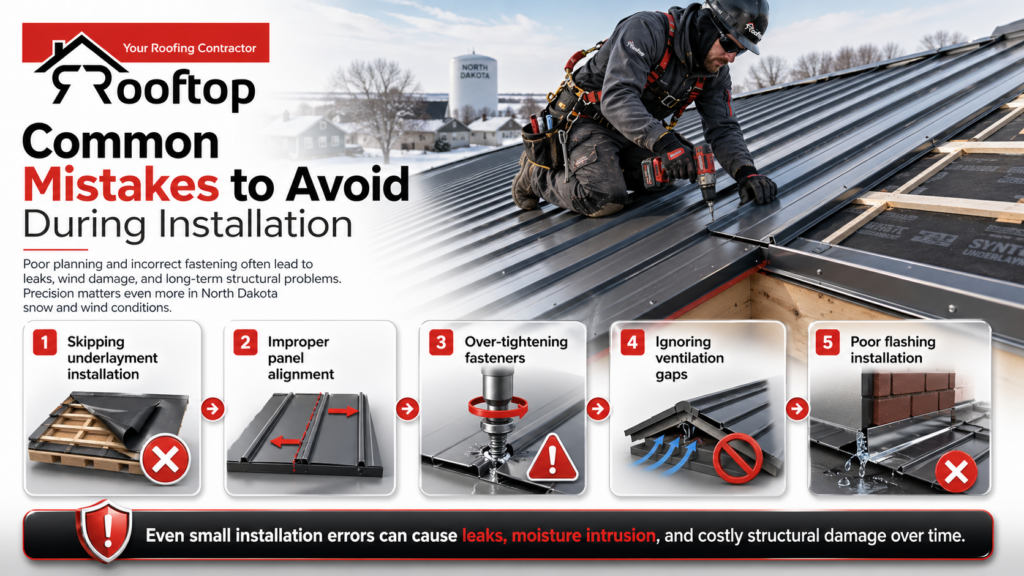
We always advise checking each stage carefully before moving forward. Even small errors can lead to long-term leaks or structural damage. In North Dakota’s weather conditions, precision becomes even more important due to snow and wind pressure.
Maintenance and performance tips for metal roofs
After you install metal roofing for the building, regular maintenance ensures long-term durability. We recommend seasonal inspections, especially after heavy storms.
Key maintenance steps:
- Check fasteners for loosening
- Inspect flashing and joints
- Remove debris from the roof surface
- Monitor insulation condition
- Look for early signs of corrosion
We often remind clients that metal roofing performs best when minor issues are addressed early. Preventive care always costs less than major repairs.
FAQs
How long does it take to install metal roofing for a building?
Most residential projects take 2–5 days, depending on roof size and weather conditions. Complex structures may require additional time for proper alignment and sealing.
Is metal roofing better than shingles?
Yes, metal roofing offers a longer lifespan, better weather resistance, and improved energy efficiency compared to asphalt shingles.
Do I need underlayment for metal roofing?
Yes, roofing underlayment for a metal roof is essential. It prevents moisture damage and adds extra protection against leaks.
Can metal roofing reduce energy bills?
Yes, energy-efficient metal roofing reflects heat and improves insulation, helping reduce cooling and heating costs.
Should I hire a contractor for installation?
Hiring a professional ensures a correct metal roof fastening system setup, proper flashing, and long-term durability.
Work With Our Roofing Experts in Bismarck
When you plan to install metal roofing for a building, we bring real field experience from projects across Bismarck and nearby areas. We handle everything from inspection to final installation with precision and care.
If you want a reliable solution, we are ready to help you plan and execute your roofing project the right way. Contact us through our Contact Page or explore more about our company on the About Us page. We ensure every project meets durability, safety, and long-term performance standards for your property.